
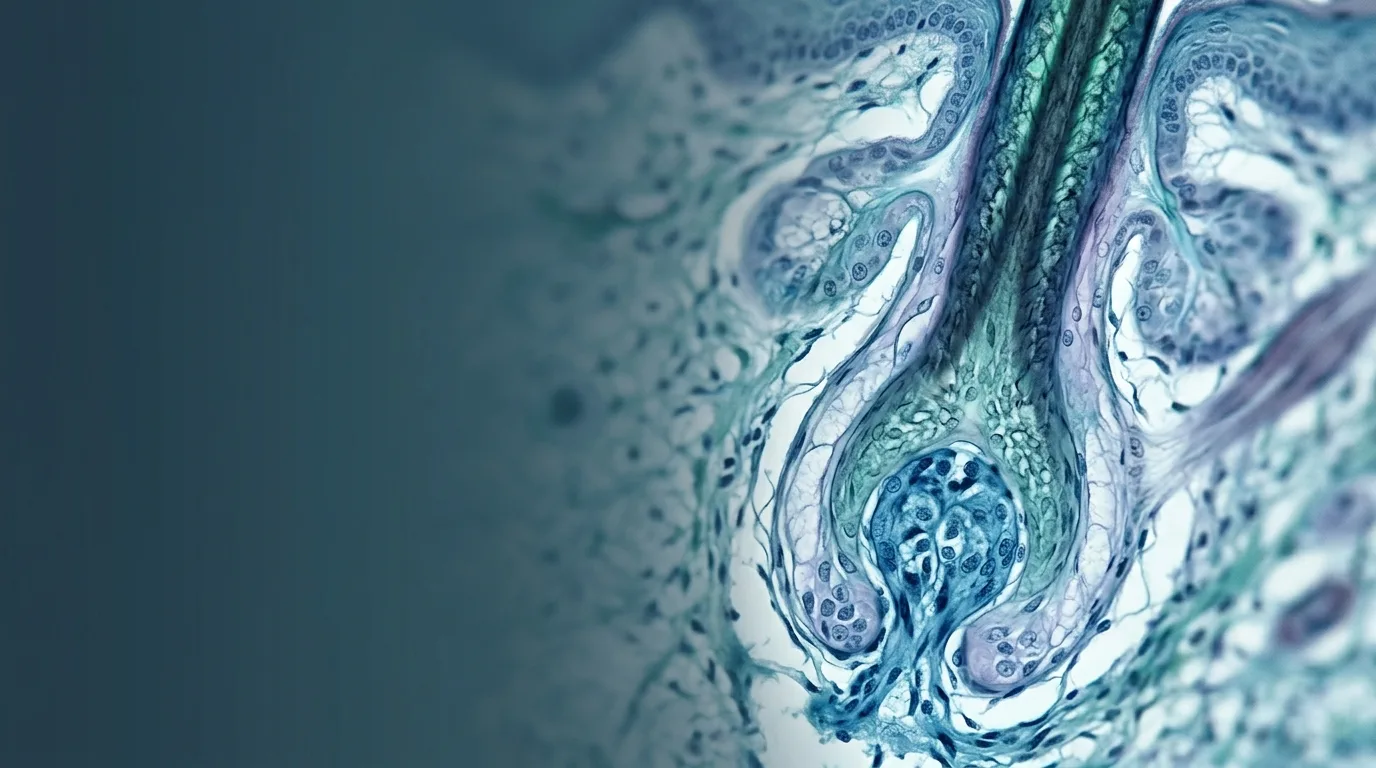
GHK-Cu occupies a strange position in the peptide research landscape. It has genuinely compelling mechanistic data pointing toward effects on hair follicle biology, yet the commercial hair loss industry has run so far ahead of the actual evidence that separating signal from noise requires careful work. This article is that effort. GHK-Cu, or glycyl-L-histidyl-L-lysine copper(II) complex, was first isolated by Loren Pickart from human albumin fractions in 1973. It is an endogenous tripeptide whose plasma concentrations decline measurably with age, from roughly 200 ng/mL in young adults to approximately 80 ng/mL by age 60. That decline, and what it might mean for tissue repair, is part of what makes GHK-Cu biologically interesting. The core question this piece addresses is straightforward: what does the GHK-Cu hair growth evidence actually consist of, what tier of evidence is it, and how honestly does it compare to treatments with established human clinical trial records like minoxidil?
What Is GHK-Cu and Why Does It Interest Hair Researchers?
GHK-Cu is a tripeptide copper complex in which a glycine-histidine-lysine sequence coordinates a copper(II) ion through a square-planar geometry. The coordination sites involve the alpha-amino group of glycine, the imidazole nitrogen of histidine, two deprotonated amide nitrogens from the peptide backbone, and potentially an axial water molecule. This precise geometry is not a biochemical footnote; it is central to how the complex differs from free copper ions, which are cytotoxic at equivalent concentrations.
GHK binds copper(II) with an exceptionally high affinity constant, log K approximately 16.4, enabling it to donate copper to cuproenzymes and initiate downstream signaling cascades in ways free copper cannot. Plasma concentrations tell part of the biological story. At ages 20 to 25, circulating GHK sits near 200 ng/mL. By age 60, that figure has fallen to approximately 80 ng/mL, a reduction of around 60%. The hypothesis linking this decline to reduced tissue repair capacity and elevated systemic inflammation is scientifically reasonable, and it forms the rationale for exploring exogenous GHK-Cu application.
Critically, hair follicle research interest in GHK-Cu did not emerge from hair-specific biology. It grew from the peptide's broader profile in wound healing and tissue remodeling. Researchers studying follicle maintenance recognized that the same extracellular matrix remodeling and anti-inflammatory pathways GHK-Cu activates in skin wound models might also be relevant to the dermal papilla microenvironment on which hair follicles depend. That mechanistic inference, reasonable as it is, still required direct experimental testing.
The plasma GHK decline across age brackets shows a clear pattern. At ages 20 to 25, levels reach approximately 200 ng/mL. By ages 40 to 45, levels drop to around 140 ng/mL. By age 60, levels fall to approximately 80 ng/mL. The breakdown illustrates a progressive 60% reduction from early adulthood to age 60, lending weight to the tissue-repair hypothesis.
Mechanistic Basis and GHK-Cu Hair Growth Evidence: How It May Affect Hair Follicles
Understanding the GHK-Cu hair growth evidence requires understanding the mechanisms proposed to underlie it. GHK-Cu does not operate through a single pathway. It influences gene expression across multiple tissue-repair and inflammatory control networks, several of which are directly relevant to follicle biology.
At the molecular level, GHK-Cu upregulates over 31 genes associated with wound healing and tissue repair in fibroblast cultures. These include collagen I, collagen III, fibronectin, and decorin. Simultaneously, it downregulates pro-inflammatory cytokine pathways, specifically TNF-alpha and IL-6 signaling. In the context of androgenic alopecia, where chronic low-grade follicular inflammation is now recognized as a contributing mechanism, this dual action carries genuine theoretical relevance.
GHK-Cu also stimulates glycosaminoglycan synthesis, specifically hyaluronic acid and dermatan sulfate production by dermal fibroblasts. The dermal papilla, the specialized mesenchymal cell cluster at the base of each hair follicle that controls follicle cycling, depends on an intact extracellular matrix microenvironment. Improving GAG composition in the perifollicular dermis is a plausible route to supporting papilla function, though this specific chain of causation has not been experimentally confirmed in human follicle models.
Keratinocyte proliferation is another mechanistically relevant pathway. In murine and in vitro models, GHK-Cu was shown to increase hair follicle size and stimulate proliferation of follicular keratinocytes, as reported by Uno and colleagues in Skin Pharmacology in 1993. This is the primary preclinical data point for follicle-specific effects and the most frequently cited finding in the hair loss literature.
Beyond direct follicle effects, GHK-Cu activates superoxide dismutase and catalase, the body's primary endogenous antioxidant enzymes. Rather than acting as a direct free-radical scavenger, it upregulates the enzymatic machinery that neutralizes oxidative stress. Since oxidative stress in the scalp microenvironment has been associated with follicle miniaturization in androgenic alopecia, this represents a secondary but credible indirect mechanism. The gene pathways affected span wound repair, anti-inflammation, antioxidant defense, and extracellular matrix remodeling, a range that underscores both the mechanistic plausibility and the complexity of interpreting GHK-Cu effects in any single tissue system.
What Animal and In Vitro Studies Actually Show
The preclinical evidence base for GHK-Cu in hair biology centers on a small number of studies, most notably the 1993 work by Uno and colleagues, which documented follicle size increases and keratinocyte proliferation in murine models. These findings are real, peer-reviewed, and have not been meaningfully challenged. However, they carry the inherent limitations of their evidence tier.
Mouse hair follicle cycling differs substantially from human follicle biology. Murine follicles cycle rapidly and synchronously across large skin regions, while human follicles cycle asynchronously with longer anagen phases. Androgenic alopecia, the most common human hair loss condition, does not have a clean murine equivalent. The relevance of mouse follicle enlargement data to human pattern baldness is therefore genuinely uncertain, not a minor qualification to be noted and then ignored.
In vitro keratinocyte proliferation studies face a related extrapolation problem. Cell cultures lack the three-dimensional papilla-follicle architecture, the hormonal signaling environment, and the vascular and neural inputs that characterize in vivo follicle function. Demonstrating that GHK-Cu promotes keratinocyte division in a dish is informative but mechanistically incomplete as a prediction of clinical efficacy.
The SOD and catalase activation finding adds an important secondary dimension. Oxidative stress is not merely a peripheral issue in hair loss biology; there is substantial evidence that reactive oxygen species accumulate in the follicular environment in androgenic alopecia and contribute to miniaturization. GHK-Cu's capacity to upregulate antioxidant enzyme activity may therefore support follicle health through a mechanism entirely independent of its direct proliferative effects. This is worth noting precisely because it suggests GHK-Cu could influence hair biology through multiple routes simultaneously, even if no route has yet been confirmed in a human trial.
GHK-Cu vs. Minoxidil: A Direct Comparison
The 1993 Uno et al. mouse model study included a comparative arm, and the result is the most frequently cited and most frequently misrepresented finding in the GHK-Cu hair literature. In that study, GHK-Cu outperformed minoxidil on follicle enlargement metrics in the murine model. This is an accurate summary of the data. What frequently follows that summary in commercial contexts is where accuracy breaks down.
The evidence hierarchy for these two compounds could not be more different. Minoxidil has been evaluated in multiple large-scale, double-blind, placebo-controlled randomized controlled trials in humans. It received FDA approval for androgenic alopecia in 1988. Decades of post-market clinical use data, physician-reported outcomes, and comparative studies with finasteride exist in the peer-reviewed literature. GHK-Cu has none of this for hair loss indications.
A direct comparison across evidence levels clarifies the situation. For animal model evidence, both GHK-Cu and minoxidil have supporting data, with GHK-Cu showing superior follicle enlargement in the 1993 mouse study. For in vitro evidence, GHK-Cu has keratinocyte proliferation data; minoxidil has potassium channel activation and prostaglandin pathway data. For human RCT evidence in hair loss, minoxidil has multiple large trials with standardized hair density endpoints and published efficacy data. GHK-Cu has zero. For regulatory approval in hair loss, minoxidil holds FDA approval. GHK-Cu holds none. These numbers highlight the critical asymmetry that makes the mouse study comparison essentially incomplete without the human data layer.
Stating that GHK-Cu outperformed minoxidil in one animal study, without the full context of this evidence hierarchy, is misleading. A single murine follicle enlargement metric is not a proxy for clinical superiority. The comparison simply cannot be completed with the evidence that currently exists.
The Human Evidence Gap: What Clinical Trials Exist?
This is where an honest audit of the GHK-Cu hair growth evidence must be unambiguous. As of the current published literature, no peer-reviewed, randomized controlled trials have specifically examined GHK-Cu for androgenic alopecia or any other hair loss condition in humans. That absence is the defining feature of this compound's clinical profile for hair indications.
The sole rigorous human RCT for GHK-Cu is the Leyden et al. study published in the Archives of Dermatology in 2001. That double-blind, placebo-controlled trial demonstrated that topical GHK-Cu formulations significantly improved skin laxity, density, and thickness after 12 weeks compared to placebo. These results are meaningful for understanding GHK-Cu's effects on skin structure. They are not hair loss data. Skin thickness improvements do not translate directly to follicle cycling or hair density outcomes, and treating this trial as hair loss evidence misrepresents its scope.
The absence of hair-specific human trials is not straightforwardly interpretable as evidence of inefficacy. Clinical trial funding for cosmetic peptides follows commercial incentives that are frequently misaligned with rigorous scientific evaluation. Regulatory pathways for hair loss treatments require expensive, lengthy trials that few peptide researchers are positioned to fund without pharmaceutical backing. GHK-Cu's classification as a cosmetic ingredient in topical form further reduces the financial pressure to conduct drug-standard trials.
What rigorous evidence would actually require is specific. A double-blind, randomized, placebo-controlled trial with standardized hair density endpoints, using phototrichogram or trichoscopy as objective measures, with an adequate sample size (typically 100 or more participants per arm for hair loss studies), sufficient treatment duration (at least 24 weeks), and peer-reviewed publication would constitute meaningful evidence. Nothing matching that description currently exists in the published literature for GHK-Cu and hair loss.
Topical Delivery: Can GHK-Cu Even Reach the Follicle?
Even setting aside the clinical trial gap, a fundamental pharmacological question remains. Can topically applied GHK-Cu reach hair follicles at therapeutically relevant concentrations? The answer is genuinely uncertain, and the physicochemical properties of the molecule do not favor optimism without careful formulation work.
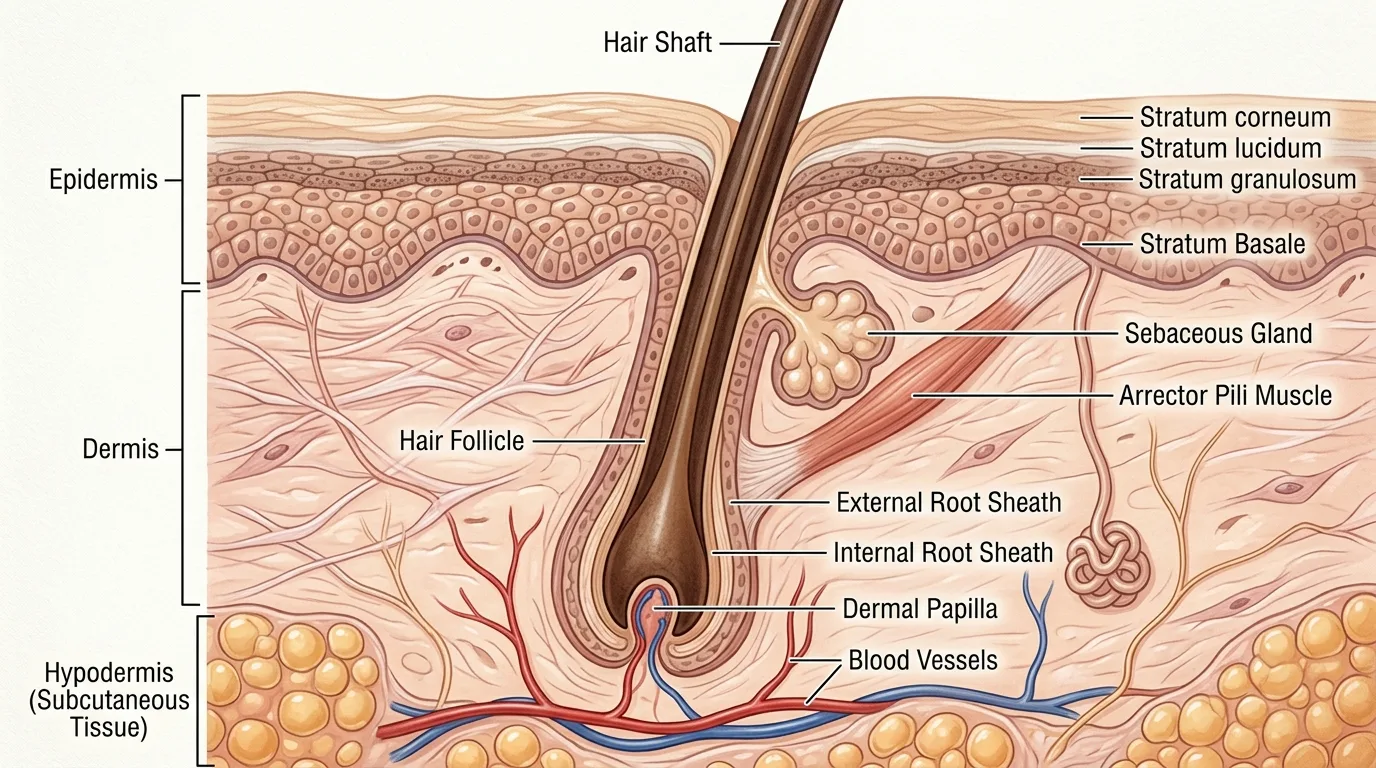
As the copper complex, GHK-Cu has a molecular weight of approximately 403.9 Da. This places it near but not comfortably below the empirical 500 Da transdermal permeation threshold widely applied in dermatology. However, molecular weight is not the only relevant parameter. GHK-Cu's low logP, reflecting its hydrophilicity, creates a substantive skin barrier challenge independent of molecular weight. The stratum corneum is primarily a lipophilic environment, and hydrophilic molecules struggle to partition into it regardless of size.
Liposomal encapsulation has been shown in preclinical studies to improve skin penetration of GHK-Cu by up to fourfold compared to aqueous solution formulations. Solid lipid nanoparticles are also under investigation as delivery vehicles. These are genuinely promising formulation strategies, but the data supporting them is preclinical. Whether enhanced penetration in ex vivo skin models or animal studies translates to therapeutic follicular concentrations in living human scalp tissue remains unconfirmed.
The practical implication is that formulation quality matters enormously when evaluating any topical GHK-Cu product. A cosmetic-grade aqueous serum may deliver concentrations at the follicle level that are far below those used in preclinical efficacy studies, making meaningful biological activity at the follicle genuinely questionable regardless of the ingredient's theoretical profile.
Safety Profile and Quality Considerations
For topical cosmetic applications, GHK-Cu has a well-established tolerability record. It is broadly permitted as a cosmetic ingredient in the European Union, United States, and major Asian markets. Contact sensitization and irritation appear to be rare at typical cosmetic use concentrations. The square-planar copper coordination geometry is a genuine safety advantage; the copper in GHK-Cu behaves fundamentally differently from free Cu(II) ions, which are toxic at equivalent concentrations, because its coordination suppresses the free radical-generating redox activity of unbound copper.
Injectable use is a different matter entirely. As an injectable, GHK-Cu falls into drug regulatory territory with requirements that cosmetic-grade materials do not meet. Pharmaceutical-grade injectables require USP sterility standards, endotoxin levels below 0.1 EU/mL, and identity verification by both HPLC and mass spectrometry. The research peptide and biohacking market frequently sells GHK-Cu materials that lack purity verification at this standard. Purchasing injectable-grade peptides from unregulated sources carries real safety risks that no mechanistic plausibility argument can offset. The compound's favorable biological profile does not compensate for endotoxin contamination or unverified purity in a product intended for injection.
The Honest Evidence Position
GHK-Cu has a scientifically credible mechanistic basis for influencing hair follicle biology. The pathways it modulates, including follicular keratinocyte proliferation, extracellular matrix remodeling, anti-inflammatory cytokine suppression, and antioxidant enzyme upregulation, are genuinely relevant to follicle maintenance and androgenic alopecia pathophysiology. The 1993 Uno murine study showing superior follicle enlargement compared to minoxidil is real data, appropriately interpreted as an interesting preclinical signal.
What does not exist is the human clinical evidence needed to move from mechanistic plausibility to clinical recommendation. No peer-reviewed RCT for GHK-Cu in hair loss has been published. The single human RCT of note addressed skin structure, not scalp hair. Topical delivery limitations introduce a further layer of uncertainty about whether standard commercial formulations can achieve follicle-level concentrations sufficient to drive the effects seen in preclinical models.
GHK-Cu is best understood as a genuinely interesting candidate for clinical investigation rather than a proven hair loss treatment. The GHK-Cu hair growth evidence that would actually matter, a double-blind RCT with standardized trichoscopic endpoints and adequate power, has not yet been conducted. Evaluating any peptide for hair loss requires distinguishing mechanistic plausibility from clinical proof. These are not the same thing, and the distance between them is exactly what clinical trials are designed to measure. For GHK-Cu and hair, that measurement has not yet been taken.
Sources
- gethealthspan.com — gethealthspan.com
- perfectb.com — perfectb.com
- nih.gov — pmc.ncbi.nlm.nih.gov
- mdhair.co — mdhair.co
- peptidesexplorer.com — peptidesexplorer.com
- plasticsurgerykey.com — plasticsurgerykey.com