
Most anti-aging comparisons are designed to produce a winner. One ingredient gets crowned, the other gets dismissed, and readers walk away with a purchasing decision rather than an understanding. The comparison between GHK-Cu and retinol for anti-aging deserves something more honest than that, because the evidence genuinely does not support a simple verdict.
Both GHK-Cu and retinol appear on product labels with impressive frequency. Both have real science behind them. But they differ fundamentally in how they work, how well they have been tested in humans, how skin tolerates them, and how stable they are in a bottle. A rigorous comparison requires examining all of those dimensions, not just cherry-picking the most flattering data for each side.
What follows is an attempt at exactly that. The goal is not to declare a winner in the GHK-Cu vs retinol for anti-aging debate, but to map the genuine strengths and limitations of each, assess whether they can work together, and give you the framework to make a context-specific decision rather than a reflexive one.
What GHK-Cu Actually Is and How It Works
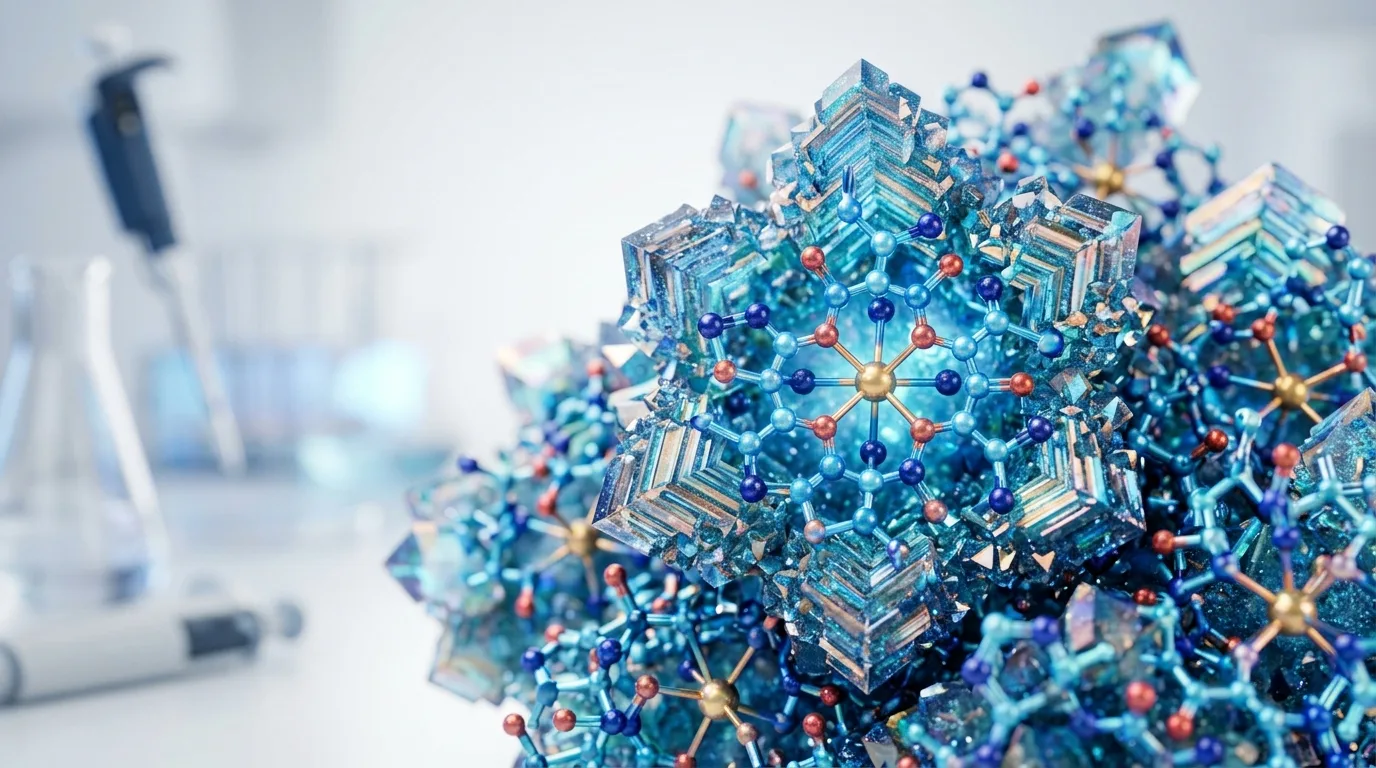
GHK-Cu is a naturally occurring tripeptide, specifically glycyl-L-histidyl-L-lysine, complexed with copper(II) ions. It was first isolated from human albumin fractions by Loren Pickart in 1973, where it was identified as a fragment that stimulated liver tissue regeneration in vitro. Its copper-binding properties were characterized subsequently, and that copper coordination turned out to be central to nearly everything interesting about it biologically.
The binding affinity between GHK and copper(II) is exceptionally high, with a log K value of approximately 16.4. This far exceeds the affinity of many endogenous copper-chelating agents, and it matters because that tight coordination is what allows GHK-Cu to donate copper to cuproenzymes and initiate downstream gene expression cascades. The coordination geometry is square-planar, involving the alpha-amino group of glycine, the imidazole nitrogen of histidine, and two deprotonated amide nitrogens from the peptide backbone. This precise architecture is what distinguishes GHK-Cu biologically from free Cu(II) ions, which are toxic at equivalent concentrations.
Plasma concentrations of GHK decline substantially with age. In individuals aged 20 to 25, plasma GHK runs at approximately 200 ng/mL. By age 60, that figure has dropped to roughly 80 ng/mL. This age-related decline is hypothesized to contribute to reduced tissue repair capacity and increased systemic inflammation in older adults. The breakdown illustrates why researchers became interested in topical and systemic repletion strategies.
The downstream biological effects are broad. GHK-Cu upregulates over 31 genes associated with wound healing and tissue repair in fibroblast cultures, including collagen I, collagen III, fibronectin, and decorin. It also stimulates glycosaminoglycan production including hyaluronic acid and dermatan sulfate, which contributes to skin hydration and extracellular matrix integrity. Its antioxidant action is not direct free-radical scavenging but rather upregulation of superoxide dismutase and catalase activity, which is a mechanistically distinct and potentially more durable form of antioxidant defense.
What Retinol Actually Is and How It Works
Retinol is a vitamin A derivative that the skin converts enzymatically, first to retinaldehyde, then to retinoic acid, which is the biologically active form. Retinoic acid binds nuclear retinoic acid receptors, called RARs, and directly regulates gene transcription. This is a well-characterized pathway with decades of mechanistic research behind it.
The anti-aging mechanism of retinoids operates on several levels simultaneously. Retinoids stimulate epidermal cell turnover, which accelerates the shedding of older, damaged keratinocytes and brings fresher cells to the surface. They inhibit matrix metalloproteinase activity, reducing the enzymatic degradation of existing collagen. They also promote new collagen synthesis via TGF-beta pathways, addressing structural loss in aged dermis.
Retinoids exist on a potency spectrum. Retinol is the weakest over-the-counter form, requiring multiple conversion steps before becoming active. Retinaldehyde is one step closer to retinoic acid and is somewhat more potent. Tretinoin, the prescription form, is retinoic acid itself and requires no conversion, making it the most efficacious and the most irritating. The irritation profile scales with potency across the spectrum. These numbers highlight a real clinical tradeoff that every prescriber and user confronts.
What separates retinoids from almost every other topical anti-aging ingredient is the volume of human clinical evidence. Multiple large, long-duration, placebo-controlled randomized controlled trials over several decades establish efficacy for fine lines, pigmentation, and skin texture. When the comparison reaches the question of clinical proof, retinoids hold a significant advantage that honest analysis cannot overlook.
Comparing GHK-Cu vs Retinol for Anti-Aging Mechanisms: Overlap and Divergence
Both GHK-Cu and retinol stimulate collagen synthesis, and it is tempting to treat that shared outcome as evidence of redundancy. It is not. The pathways are entirely different. Retinoids operate through nuclear receptor-mediated transcription, binding RARs to directly regulate gene expression in keratinocytes. GHK-Cu operates through fibroblast gene expression modulation and copper-dependent enzyme activation, a fundamentally distinct cellular mechanism acting on a different cell population.
The divergence extends beyond mechanism. GHK-Cu has demonstrated a counterintuitive homeostatic property: it stimulates collagen production in atrophic skin while normalizing excessive collagen deposition in fibrotic tissue. The same peptide can both increase and decrease collagen depending on the tissue context. Retinoids do not show this bidirectional modulation, operating more consistently as stimulants of turnover and synthesis.
GHK-Cu additionally stimulates GAG production and activates antioxidant enzyme systems. Retinoids primarily target keratinocyte turnover and MMP inhibition. These are genuinely complementary mechanisms, not redundant ones. A side-by-side pathway comparison makes the divergence particularly clear: one ingredient is working predominantly in the epidermis through nuclear receptors, the other is working in the dermis through fibroblast signaling and copper-enzyme interactions. This non-overlap is directly relevant to the question of combination use, which is addressed later.
The Evidence Gap: Clinical Trials and What They Actually Show
The evidence gap between GHK-Cu and retinoids is real, and any honest comparison of GHK-Cu vs retinol for anti-aging must address it plainly. It does not mean GHK-Cu lacks scientific credibility. It means the volume and design quality of human clinical trials differ substantially between the two ingredients.
Retinoids have accumulated evidence across several hundred published human trials over more than four decades. Multiple large, randomized, placebo-controlled trials with long follow-up periods establish efficacy for photoaging, fine lines, pigmentation, and skin texture. Tretinoin in particular has a human evidence base that approaches pharmaceutical-grade documentation for a topical anti-aging ingredient. Retinol, as the cosmetic form, has fewer but still substantial RCTs supporting its efficacy.
GHK-Cu's most rigorous human evidence comes from a 2001 double-blind, placebo-controlled trial published in the Archives of Dermatology by Leyden and colleagues, which demonstrated significant improvements in skin laxity, density, and thickness after 12 weeks of topical use compared to placebo. That result is meaningful. But one well-designed trial is not a body of evidence, and the majority of GHK-Cu's compelling data comes from in vitro fibroblast cultures and animal models.
Consider the approximate comparison. Retinoids have been evaluated in more than 200 human clinical trials relevant to photoaging. GHK-Cu has fewer than 10 genuine RCTs in humans for skin applications. These numbers highlight the central honest caveat: GHK-Cu has mechanistic plausibility and early clinical signals, but the gap between those signals and the established human trial record for retinoids is significant. The breakdown illustrates why evidence-based practitioners default to retinoids as the clinical standard while remaining appropriately open to GHK-Cu as a complementary option.
Both ingredients also share a problem common to cosmetic research broadly. Underreported effect sizes and industry-funded trial bias affect the literature on both sides. Neither has achieved the evidence standard required for pharmaceutical approval of an anti-aging indication. The appropriate framing is that retinoids have stronger evidence, not that GHK-Cu has weak evidence overall.
Skin Tolerance and Safety Profiles
Retinol's tolerability profile is one of the most extensively documented limitations in dermatology. Retinoid dermatitis, characterized by dryness, peeling, erythema, and photosensitivity, affects a substantial proportion of users, particularly during initiation. Estimates from clinical literature suggest that 30 to 50 percent of users experience meaningful irritation during the first four to eight weeks of use, with higher rates at higher concentrations. For tretinoin, the irritation rate is higher still. Photosensitivity is a consistent concern, requiring diligent sun protection and typically limiting application to evening use.
GHK-Cu presents a substantially more favorable tolerance profile. Published studies report minimal irritation at cosmetic doses, with no significant rates of contact sensitization or phototoxicity documented in the available literature. For users with sensitive skin, rosacea, perioral dermatitis, or a history of retinoid intolerance, this difference is clinically meaningful and not merely cosmetic. These numbers highlight a genuine advantage for GHK-Cu in tolerance-limited populations.
An important caveat for GHK-Cu relates to purity and sourcing, particularly relevant to readers interested in research or self-administration contexts. Cosmetic-grade GHK-Cu is typically 95 percent or greater pure by HPLC, which is adequate for topical formulation. Pharmaceutical-grade injectable preparations should meet USP standards for sterility, endotoxin levels below 0.1 EU/mL, and identity verification by mass spectrometry. The biohacking and research peptide markets frequently supply materials that lack these critical quality assurances, creating safety risks that are entirely separate from the ingredient's inherent biological profile.
Formulation Stability and Bioavailability Challenges
Retinol is notoriously unstable in formulation. It degrades rapidly on exposure to light, air, and elevated temperature, which means product efficacy in real-world use is highly dependent on packaging quality. Opaque, airtight containers and antioxidant co-formulants are essential, and even with careful formulation, retinol potency can decline meaningfully over a product's shelf life. This instability introduces variability into what a consumer actually receives versus what was measured in a clinical trial.
GHK-Cu faces a different set of formulation challenges. Its molecular weight is approximately 340 Da for the tripeptide and 404 Da as the copper complex, placing it near but not comfortably below the 500 Da theoretical threshold for efficient transdermal permeation. More significantly, its hydrophilicity, indicated by a low logP value, creates a genuine bioavailability barrier for topical formulations. The skin's stratum corneum is designed to resist water-soluble molecules, and GHK-Cu's polar character means passive diffusion into the dermis is limited without delivery enhancement.
Formulation research is actively addressing this. Liposomal encapsulation has demonstrated up to a 4-fold improvement in skin penetration compared to aqueous solution formulations in preclinical studies. Solid lipid nanoparticles are also under investigation as delivery vehicles. However, these delivery systems are not yet standard in most commercial products, meaning the GHK-Cu concentration listed on a product label does not necessarily translate to the bioavailable dose reaching dermal fibroblasts. pH is an additional practical consideration. GHK-Cu performs best near physiological pH. Highly acidic formulations, such as those used with vitamin C or alpha-hydroxy acids, can destabilize the copper complex, a real compatibility issue that product layering advice frequently ignores.
Can GHK-Cu and Retinol Be Used Together?
The question of whether GHK-Cu and retinol can be used together is one of the most practically important aspects of the GHK-Cu vs retinol for anti-aging discussion. The honest answer is that there is no published evidence of antagonistic interaction between the two ingredients, and their non-overlapping mechanisms suggest the combination is rational rather than redundant.
GHK-Cu primarily modulates fibroblast activity and extracellular matrix production in the dermis. Retinol primarily accelerates keratinocyte turnover and inhibits MMP activity in the epidermis and at the dermo-epidermal junction. Combining them targets distinct cellular compartments with distinct pathways, which is a more defensible rationale for combination use than most multi-ingredient skincare formulas can offer.
Practical application timing matters. GHK-Cu is better suited to morning application given its antioxidant enzyme-activating properties, which complement daytime oxidative stress exposure. Retinol should be applied in the evening, both to avoid photosensitivity concerns and to take advantage of the skin's overnight repair processes. This timing separation also reduces the risk of pH-related destabilization of the copper complex.
Vitamin C compatibility is a frequent question in this context. Highly acidic ascorbic acid formulations at pH below 3.5 can theoretically destabilize the copper complex in GHK-Cu. Buffered or neutral vitamin C formats are more chemically compatible. This is not a reason to avoid all vitamin C products, but it is a formulation chemistry consideration that routine combination skincare advice routinely omits. The recommendation to combine GHK-Cu and retinol is mechanistically rational, but honest framing requires acknowledging that it is based on mechanistic reasoning and tolerability data rather than a direct clinical trial of the combination.
Which Should You Choose and When?
A useful decision framework for GHK-Cu vs retinol for anti-aging starts with tolerability and evidence hierarchy, then layers in individual skin context and specific goals. The framework resists the false binary because both ingredients have legitimate roles, and the optimal answer for most people is not either/or.
For users who can tolerate it, retinol remains the evidence-supported first choice when the primary goal is addressing fine lines, uneven pigmentation, and overall photoaging. The volume of human clinical proof is simply greater, and that matters when making an evidence-based decision. Tretinoin offers greater efficacy for those who can access it and manage the irritation. Retinol is a reasonable starting point for most.
GHK-Cu is the rational primary choice for users with sensitive or reactive skin, those with a history of retinoid intolerance, individuals managing rosacea or compromised barrier function, and anyone specifically targeting skin density, firmness, and hydration rather than primarily pigmentation and surface texture. It is also the more appropriate ingredient in wound-healing and post-procedural recovery contexts, where its fibroblast-stimulating and anti-inflammatory properties are particularly relevant.
For users who tolerate retinol well, adding GHK-Cu as a complementary morning application is mechanistically justified and practically feasible. The combination addresses epidermal turnover and MMP inhibition via retinol alongside dermal matrix support and antioxidant enzyme activation via GHK-Cu. Explicit limitations bear repeating here. GHK-Cu needs more large-scale human RCTs before it reaches the evidence threshold of retinoids. Retinol's irritation profile remains a genuine clinical barrier for a substantial proportion of users. Both ingredients are subject to significant formulation quality variability in the commercial market, and sourcing matters substantially for either to perform as the clinical evidence suggests.
The Honest Verdict
GHK-Cu and retinol are not rivals. They are representatives of two distinct anti-aging strategies, one operating through nuclear receptor-mediated gene transcription in keratinocytes and the other through copper-mediated fibroblast modulation in the dermis. Each has legitimate science behind it. Each has meaningful limitations that any honest analysis must state clearly.
Retinol holds the stronger volume of clinical evidence. Decades of randomized controlled trials establish its efficacy for photoaging, fine lines, and pigmentation in a way that GHK-Cu cannot yet match. GHK-Cu brings compelling mechanistic science, a substantially better tolerance profile, and a complementary biological pathway, but its human clinical trial record remains thin relative to the mechanistic promise. The gap between what the in vitro and animal data suggest and what large-scale human trials have confirmed is real, and it should influence how confident users and practitioners are in GHK-Cu as a standalone anti-aging strategy.
The most defensible position is context-informed rather than categorical. Use retinol if you can tolerate it and evidence volume is your priority criterion. Use GHK-Cu if tolerability or skin reactivity is the limiting factor, or add it to a retinol regimen as a morning complement targeting dermal density and antioxidant support. Apply them at separate times of day, mind the pH interactions with acidic co-formulants, and verify sourcing and purity for whichever form you use.
GHK-Cu research is active and expanding. The next decade of clinical trials may significantly close the evidence gap that currently separates it from retinoids on the strength-of-proof dimension. The bioinformatic analyses, the wound-healing data, and the fibroblast gene expression work collectively suggest a molecule with a broader biological reach than any single anti-aging ingredient comparison can fully capture. That potential deserves serious investigation, not uncritical hype.
Whichever ingredient you use, demand quality sourcing, verified purity, and honest efficacy claims from the products carrying these names. The science behind both is real. Whether that science survives the formulation, the supply chain, and the marketing copy is a separate question entirely, and it is one worth asking.
Sources
- nih.gov — pmc.ncbi.nlm.nih.gov
- alfa-chemistry.com — cosmetics.alfa-chemistry.com
- nih.gov — pmc.ncbi.nlm.nih.gov
- nih.gov — pmc.ncbi.nlm.nih.gov
- nih.gov — pmc.ncbi.nlm.nih.gov
- nih.gov — pubmed.ncbi.nlm.nih.gov
- arizona.edu — experts.arizona.edu
- plasticsurgerykey.com — plasticsurgerykey.com
- meetingpointhealth.com — meetingpointhealth.com
- agerejuvenation.com — agerejuvenation.com
- mdpi.com — mdpi.com
- nih.gov — pmc.ncbi.nlm.nih.gov
- antpublisher.com — antpublisher.com
- northbiomedical.com — northbiomedical.com
- semanticscholar.org — pdfs.semanticscholar.org
- agelessfuture.com — agelessfuture.com