
GHK-Cu sits in an unusual position in peptide research. It has accumulated one of the most detailed mechanistic profiles of any tripeptide studied in skin biology, yet the number of rigorous human clinical trials examining it remains strikingly small. That gap between biochemical evidence and clinical proof is not a minor footnote; it defines how honestly anyone can discuss this molecule's therapeutic potential. This article works through the available evidence layer by layer, from cell culture experiments to the handful of human trials that actually exist, testing the claims commonly made about the GHK-Cu wound healing peptide against what published data genuinely support.
GHK-Cu is a naturally occurring tripeptide, glycyl-L-histidyl-L-lysine, that binds copper(II) ions with high affinity and circulates in human plasma. Concentrations decline substantially with age, and that decline correlates with measurable changes in tissue repair capacity. Those two facts together have driven decades of scientific interest and, more recently, a surge of commercial enthusiasm that the science does not always justify. Reading this article as a structured evidence review rather than a product endorsement is precisely the point.
What Is GHK-Cu Wound Healing Peptide and Why Does It Decline With Age
The story of GHK-Cu begins in 1973, when Loren Pickart and M.M. Thaler reported isolating a tripeptide fragment from human albumin that stimulated liver tissue regeneration in vitro, publishing their findings in Nature New Biology. At that stage, the copper-binding properties of the peptide were not yet fully characterized. What Pickart had identified was a biologically active fragment that would take years to understand mechanistically.
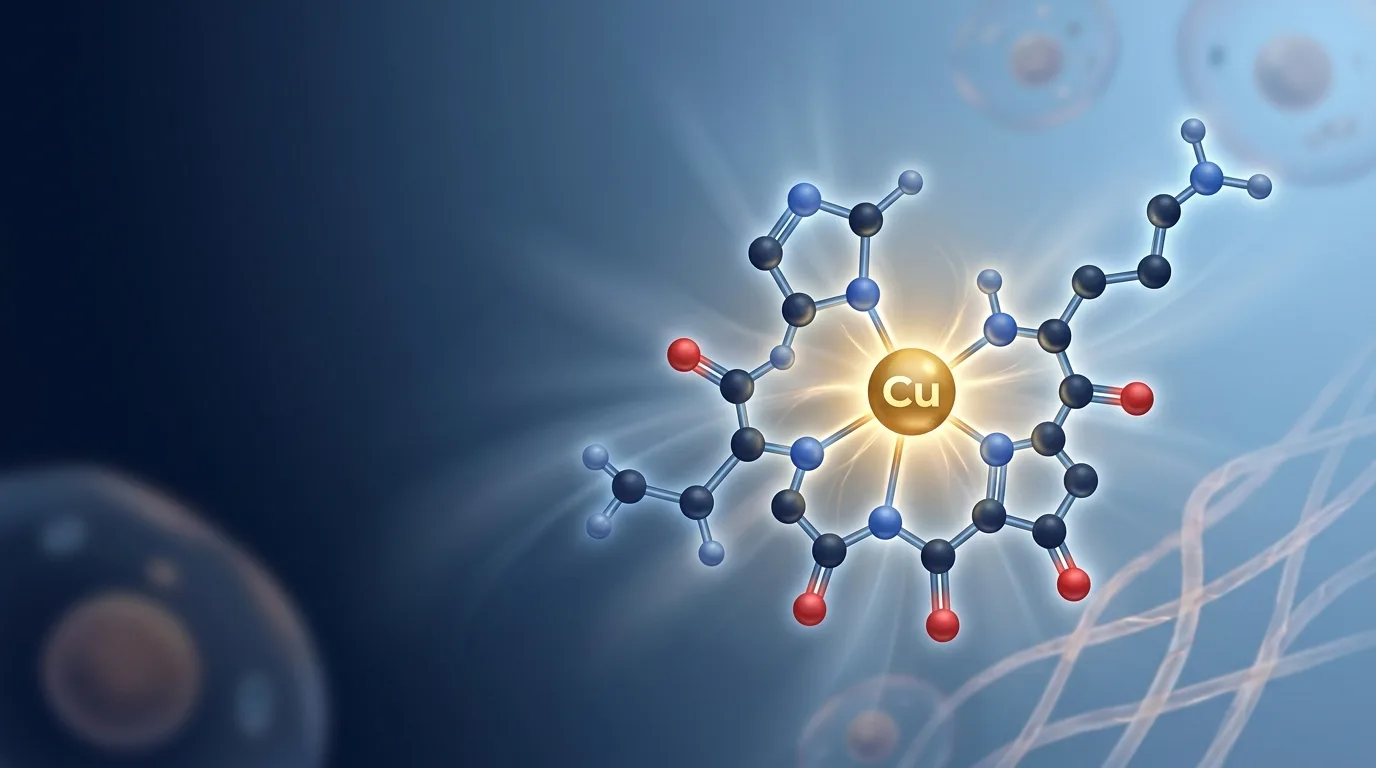
The peptide's copper chemistry is central to its biology. GHK coordinates copper(II) ions in a square-planar geometry, with binding sites provided by the alpha-amino group of glycine, the imidazole nitrogen of histidine, and two deprotonated amide nitrogens from the peptide backbone. This precise geometry is not a detail. It distinguishes GHK-Cu from free ionic copper, which is cytotoxic at equivalent concentrations. The copper complex is biologically active; free copper at the same dose would damage cells rather than repair them.
The age-related decline in plasma GHK concentrations is one of the peptide's most clinically suggestive features. Plasma levels run at approximately 200 ng/mL in adults aged 20 to 25, falling to roughly 80 ng/mL by age 60. That represents a 60% reduction across four decades. The breakdown illustrates a trajectory that broadly parallels the well-documented age-related decline in skin repair capacity and the rise in systemic low-grade inflammation.
Researchers hypothesize that falling GHK levels contribute to reduced cuproenzyme activity and diminished tissue remodeling signaling in older adults. The hypothesis is biologically plausible and provides a rational basis for investigating whether restoring GHK-Cu concentrations, topically or systemically, could support tissue repair. Plausibility, however, is not proof, and that distinction matters throughout this review.
How GHK-Cu Works: The Mechanistic Basis
Understanding why scientists find GHK-Cu interesting requires engaging with its binding chemistry. The peptide's log K affinity constant for copper(II) is approximately 16.4, which is exceptionally high relative to many endogenous copper-chelating agents. This tight coordination allows GHK-Cu to function as a copper donor to cuproenzymes rather than simply sequestering the metal, and that copper donation initiates a cascade of downstream signaling events relevant to tissue repair.
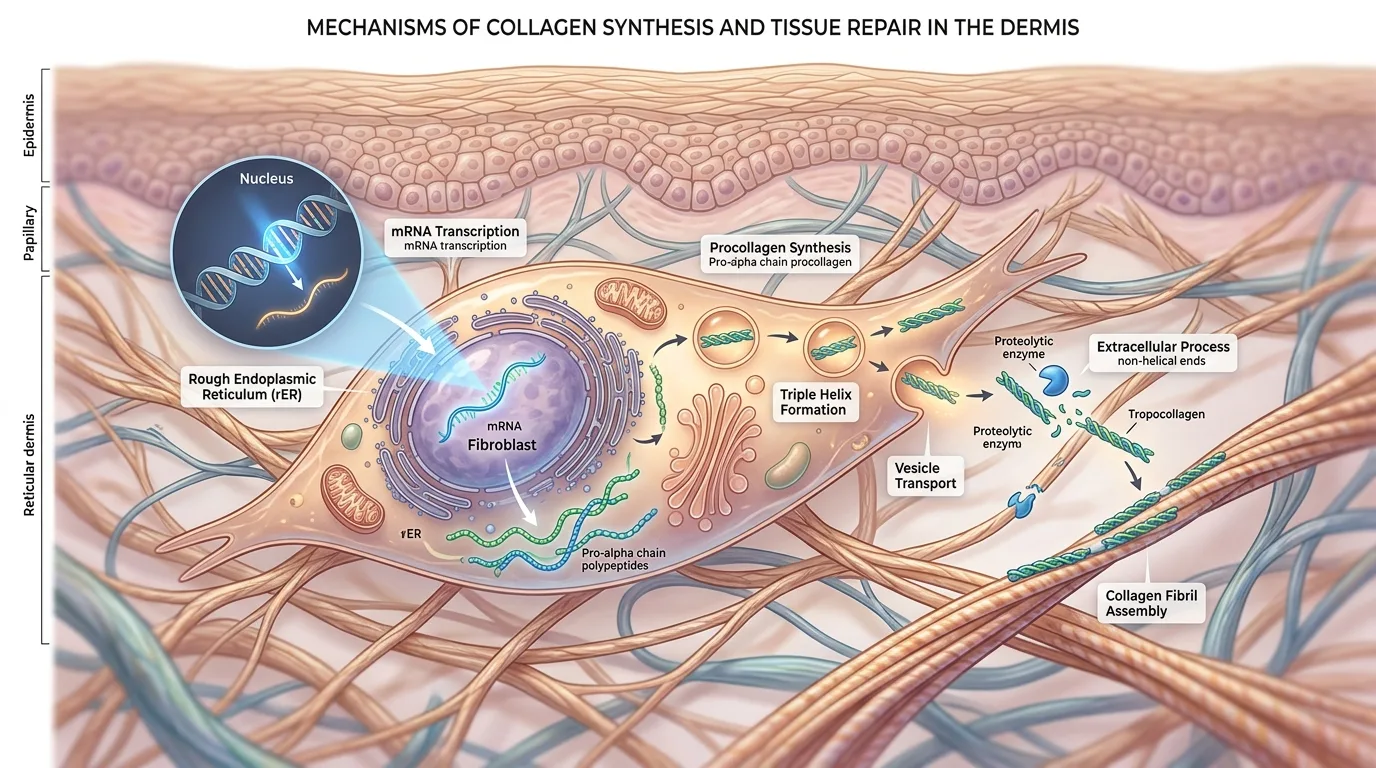
Gene expression data from fibroblast cultures are the main source of mechanistic detail. Pickart and colleagues, publishing in BioMed Research International in 2015, documented that GHK-Cu upregulates more than 31 genes associated with wound healing and tissue repair. These include genes encoding collagen I, collagen III, fibronectin, and decorin, all core components of the extracellular matrix. Simultaneously, the same treatment downregulates pro-inflammatory signaling, including TNF-alpha and IL-6 pathways.
The antioxidant action is mechanistically distinct from what most people picture when they hear the word "antioxidant." GHK-Cu does not directly scavenge free radicals. Instead, it upregulates superoxide dismutase (SOD) and catalase, the body's own enzymatic antioxidant machinery. Pickart and Margolina described this in Biomolecules in 2018, framing it as an indirect but potentially more durable form of protection than direct radical neutralization.
GHK-Cu also stimulates fibroblast production of glycosaminoglycans, specifically hyaluronic acid and dermatan sulfate. Maquart and colleagues documented this in the Journal of Investigative Dermatology in 1993, noting that the GAG-stimulating effect is additive to rather than overlapping with collagen stimulation. These combined actions cover matrix scaffolding, hydration, and structural protein synthesis simultaneously.
A 2018 review in Biomolecules catalogued GHK-Cu's influence across 32 independent biological pathways, ranging from wound repair and anti-inflammation to DNA repair activation and antioxidant defense. These numbers highlight the peptide's unusual pleiotropy, which is scientifically fascinating but also makes comprehensive clinical evaluation genuinely difficult to design and execute.
Does GHK-Cu Stimulate Collagen Production
The collagen question is where consumer-facing marketing and published science come closest to alignment, but also where the most important caveats live. The answer to whether the GHK-Cu wound healing peptide stimulates collagen production is yes, in fibroblast cultures, with consistent and well-replicated results. The more important question is what that means for living human skin.
Maquart and colleagues demonstrated increased collagen synthesis in fibroblast cultures in their 1993 Journal of Investigative Dermatology study. Across the literature, comparisons between GHK alone and GHK-Cu consistently show the copper-bound form is more potent. Copper-free GHK retains partial activity on fibroblast migration and TGF-beta signaling, but the copper complex produces larger and more consistent effects, confirming that copper coordination is central, though not entirely responsible, for bioactivity.
The anti-fibrotic paradox is one of the more intellectually interesting features of this peptide. GHK-Cu stimulates collagen synthesis in atrophic or damaged skin, but it also normalizes excessive collagen deposition in fibrotic tissue, including liver and lung fibrosis models. The same molecule behaves differently depending on the tissue state it encounters. This suggests a homeostatic regulatory role rather than simple linear stimulation, a more sophisticated and nuanced model than the phrase "boosts collagen" implies.
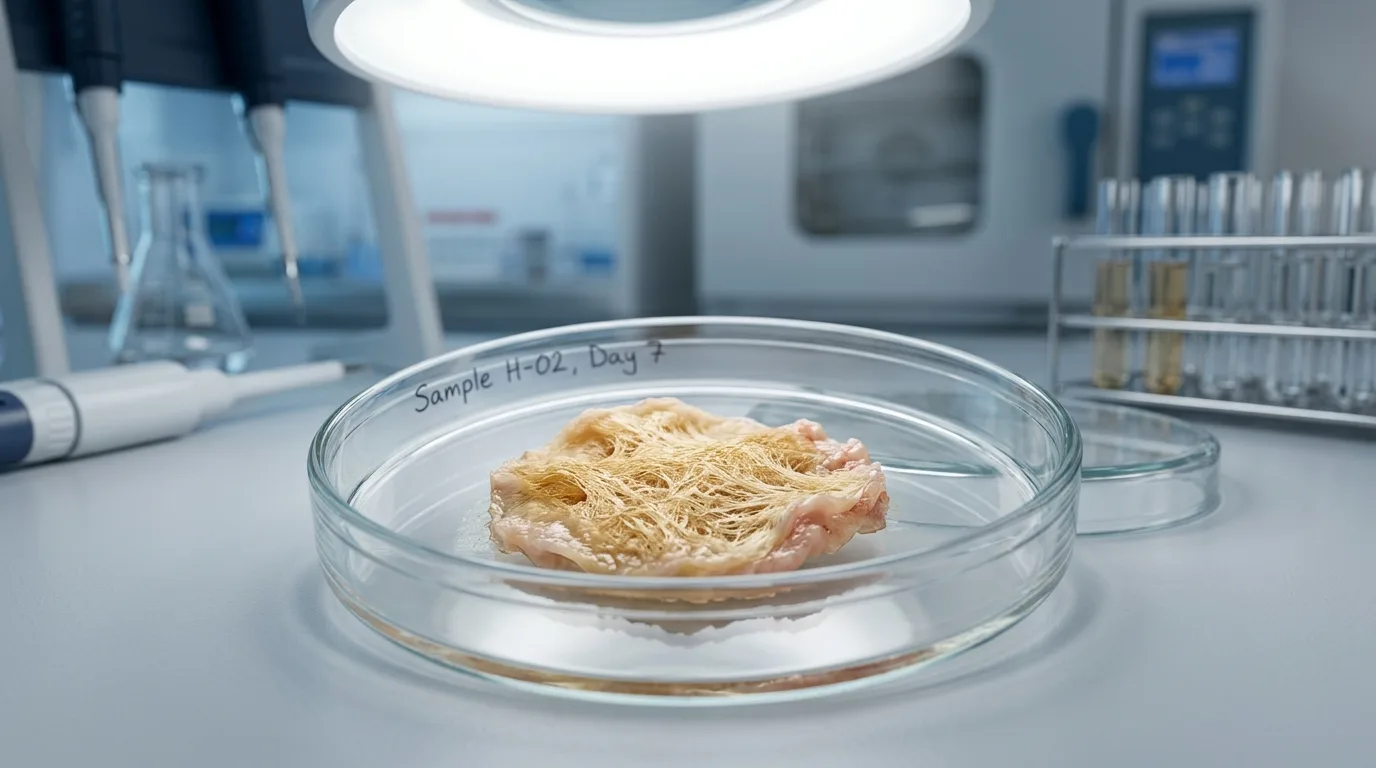
The study design limitation here deserves direct acknowledgment. The overwhelming majority of collagen data comes from cell culture assays. Fibroblasts in a Petri dish respond to GHK-Cu in ways that are well-documented. Fibroblasts in a living wound bed exist within a vastly more complex signaling environment, with competing cytokines, matrix pressures, immune cell interactions, and vascular factors that no cell culture can replicate. Extrapolating from the assay to the wound bed requires caution that is frequently absent in commercial communications about this peptide.
Anti-Inflammatory Effects: What the Data Show
Does GHK-Cu have anti-inflammatory effects? The mechanistic evidence says yes, but the clinical evidence for that effect in humans is thin. The distinction matters when evaluating whether this peptide can actually modulate inflammation in a person with an active wound.
TNF-alpha and IL-6 downregulation in gene expression studies is well-documented, as described in the 2015 Pickart et al. BioMed Research International paper. TGF-beta modulation is also documented, though TGF-beta plays a dual role in repair biology; it drives both wound healing and fibrosis depending on context, which makes its modulation by GHK-Cu another example of the peptide's context-dependent regulatory behavior rather than a simple on-off switch.
The SOD and catalase upregulation described earlier is not merely an antioxidant story. Oxidative stress and inflammatory signaling are closely coupled. Reducing reactive oxygen species burden through enzymatic pathways has genuine downstream anti-inflammatory consequences, making this mechanism relevant to both the antioxidant and anti-inflammatory claims simultaneously. This is mechanistically distinct from how NSAIDs or corticosteroids work, and any comparison should acknowledge that distinction rather than treating all anti-inflammatory agents as equivalent.
The evidence gap here is substantial. Essentially all anti-inflammatory data for GHK-Cu come from in vitro systems and rodent models. What this means practically is that researchers can construct a credible mechanistic hypothesis for anti-inflammatory activity in humans, but that hypothesis has not been tested in a controlled clinical trial measuring inflammatory biomarkers in human subjects with wounds or inflammatory skin conditions. Acknowledging this gap is not pessimism; it is scientific accuracy.
A breakdown of GHK-Cu's documented biological pathway effects from the 2018 Biomolecules review, distributed across categories including wound repair, anti-inflammatory signaling, antioxidant defense, DNA repair, and nociception, shows that wound repair and anti-inflammatory pathways together account for the majority of documented effects. These numbers highlight how central those two categories are to the peptide's overall profile, while also illustrating how broad its influence across unrelated systems makes comprehensive human trials difficult to design.
Animal Model Evidence for Wound Healing
Preclinical animal studies represent the strongest evidence linking the GHK-Cu wound healing peptide to actual tissue repair outcomes rather than gene expression changes in isolated cells. The findings are consistently positive, and the range of observed effects is broad.
Murine wound healing models have demonstrated accelerated closure rates, improved tensile strength of healed tissue, and enhanced hair follicle enlargement following GHK-Cu treatment. The hair follicle data include a notable comparative study by Uno and colleagues published in Skin Pharmacology in 1993, in which GHK-Cu outperformed minoxidil in follicle enlargement metrics in a mouse model. No equivalent human head-to-head trial comparing these two agents exists, and drawing clinical conclusions from that mouse result requires acknowledging that absence.
Nerve biology data from animal models add another dimension. In spinal cord injury and nerve crush injury models, GHK-Cu has demonstrated neuroprotective effects, stimulating axonal regrowth and myelin formation through apparent upregulation of NGF expression and BDNF pathway activation. These results are mechanistically interesting and broaden the potential therapeutic scope of the peptide, but they are entirely preclinical.
The standard limitations of animal-to-human translation apply here with particular force in dermatology. Mouse skin has a fundamentally different architecture from human skin, including greater subcutaneous muscle mass affecting wound closure mechanics, different hair follicle density, and distinct copper metabolism. These species differences mean that positive preclinical results are hypothesis-generating evidence, not clinical proof. Every published review of GHK-Cu acknowledges this gap, yet commercial applications frequently present animal data as though it directly predicts human outcomes.
Human Clinical Evidence: What Trials Actually Exist
When examining whether GHK-Cu can help with wound healing in humans, the clinical trial record becomes the critical lens, and the record is sparse. The volume problem is real: very few peer-reviewed randomized controlled trials examine GHK-Cu in human subjects, and fewer still focus on wound healing specifically.
The primary clinical anchor in the published literature is a double-blind, placebo-controlled RCT by Leyden and colleagues, published in the Archives of Dermatology in 2001. The trial enrolled subjects who used topical GHK-Cu formulations for 12 weeks. Results showed statistically significant improvements in skin laxity, density, and thickness compared to placebo. This is genuine controlled evidence from human subjects, and it represents a meaningful contribution to the GHK-Cu literature.
The critical qualification is what the Leyden trial does and does not establish. Improved skin laxity and density in photoaged skin is a cosmetic remodeling outcome. It is not equivalent to accelerated wound closure in a clinical injury setting. Skin density improvement in an intact skin remodeling study and wound healing in a patient with a surgical incision or traumatic wound are meaningfully different endpoints. Transferring conclusions from one to the other requires explicit extrapolation that most commercial claims do not acknowledge making.
An evidence quality comparison across GHK-Cu's claimed effects reveals a consistent pattern. Collagen stimulation has strong in vitro support, limited animal model support, and indirect human evidence from the Leyden cosmetic trial. Anti-inflammatory effects have strong in vitro support, moderate animal model support, and essentially no human RCT data. Wound healing specifically has moderate animal model support and no dedicated human RCT data. Hair growth has mouse model support and no human RCT. These numbers highlight how the evidence base, while substantial in breadth, is thin at the level of human clinical proof for most specific claims.
The absence of rigorous human trials is not evidence that GHK-Cu does not work in human wounds. It is evidence that the question has not been adequately tested. That distinction is important for maintaining scientific honesty about what is known versus what remains plausible but unproven.
Bioavailability and Formulation: Does It Actually Reach the Target
Even if the biological activity of GHK-Cu in human tissue is taken as established, a separate question governs topical applications. Does the peptide actually penetrate skin deeply enough to reach the fibroblasts and dermal matrix where its effects are purported to occur?
The molecular weight of GHK-Cu as a copper complex is approximately 403.9 Da, placing it near the 500 Da theoretical threshold commonly cited for transdermal permeation. Being near the threshold is not the same as crossing it efficiently. The peptide's low logP value, reflecting its hydrophilicity, creates a genuine barrier. Skin's outermost layer, the stratum corneum, preferentially passes lipophilic molecules. A hydrophilic tripeptide faces real penetration limitations in standard aqueous formulations.
Liposomal encapsulation has shown up to a 4-fold improvement in skin penetration compared to aqueous solution formulations in preclinical studies. Solid lipid nanoparticles are under active investigation as alternative delivery vehicles. Both approaches are promising at the preclinical level, but neither has been validated in a controlled human wound healing trial. Formulation technology is advancing, and this is a legitimate area of scientific progress.
Purity and quality standards introduce an additional variable that is particularly relevant for anyone encountering GHK-Cu products outside pharmaceutical channels. Cosmetic-grade material typically achieves 95% or greater purity by HPLC, which is adequate for topical skincare applications. Pharmaceutical-grade injectable preparations should meet USP sterility standards and endotoxin levels below 0.1 EU/mL, verified by mass spectrometry identity testing. Materials sold through the biohacking and research peptide markets frequently lack these quality assurances, meaning the product being used may differ substantially from what was tested in research settings.
The regulatory context reinforces this concern. GHK-Cu as a cosmetic ingredient is broadly permitted across major jurisdictions including the EU, US, and Asia. As an injectable preparation, it crosses into drug territory requiring clinical trial evidence for approval. The legal gray area between those two categories is widely exploited commercially, and understanding which category any particular product actually occupies is a practical matter with real health implications.
What the Evidence Actually Supports
The GHK-Cu wound healing peptide has a genuinely impressive mechanistic profile. Its copper chemistry is well-characterized, its gene expression effects in fibroblasts are extensively documented, its preclinical breadth across animal models is substantial, and the biological rationale for wound healing applications is coherent and scientifically credible. None of that is in dispute.
What the evidence does not yet support is confident clinical claims about wound healing in humans. The 2001 Leyden RCT established that topical GHK-Cu can produce measurable skin remodeling outcomes in human subjects over 12 weeks. That is real and meaningful. It does not establish that the peptide accelerates wound closure, reduces wound complications, or improves healing in patients with acute or chronic injuries. Those questions have not been adequately tested.
The scientific literacy lesson embedded in reviewing this evidence is worth stating explicitly. Mechanistic plausibility and animal model data generate hypotheses. They do not constitute clinical proof. A peptide that upregulates collagen genes in fibroblast cultures and accelerates wound closure in mice may or may not produce the same effects in human wound beds. The only way to know is a well-designed human trial, and that trial largely does not yet exist for GHK-Cu in wound healing contexts specifically.
Formulation research represents the most active frontier. Advances in liposomal delivery and nanoparticle carriers may eventually resolve the bioavailability questions that currently limit topical applications. If delivery can be demonstrated alongside biological activity, the case for rigorous wound healing trials strengthens considerably. The science is moving, and the current evidence gaps reflect a research field that is active rather than exhausted. Molecule Notes will continue tracking this literature as new trials and formulation studies emerge, offering updated analysis grounded in what published data actually show rather than what marketing claims suggest.
Sources
- deltapeptides.com — deltapeptides.com
- nih.gov — pmc.ncbi.nlm.nih.gov
- nih.gov — pmc.ncbi.nlm.nih.gov
- paragonsportsmedicine.com — paragonsportsmedicine.com
- meetingpointhealth.com — meetingpointhealth.com
- plasticsurgerykey.com — plasticsurgerykey.com
- researchgate.net — researchgate.net
- droracle.ai — droracle.ai
- clinicaltrials.gov — clinicaltrials.gov
- mypeptidematch.com — mypeptidematch.com
- newtropin.com — newtropin.com
- superpower.com — superpower.com