

HIV-associated lipodystrophy presents one of the more stubborn metabolic complications of long-term antiretroviral therapy. Patients develop pathological accumulations of visceral adipose tissue (VAT) that raise cardiovascular risk, distort body composition, and substantially reduce quality of life. Tesamorelin HIV lipodystrophy visceral fat reduction sits at the center of the only FDA-approved pharmacological solution to this problem, and understanding precisely why it works requires tracing a mechanistic pathway from subcutaneous injection all the way to adipocyte lipolysis. This article does exactly that, integrating molecular pharmacology, Phase III clinical outcome data, and direct comparisons with recombinant growth hormone therapy to give clinicians and informed patients a complete mechanistic picture.
What Is Tesamorelin and Why Was It Developed?
Tesamorelin is a synthetic 44-amino acid analogue of endogenous human growth hormone-releasing hormone (GHRH), identical in sequence to the native peptide but modified at the N-terminus with a trans-3-hexenoic acid group. That single structural addition transforms what would otherwise be a rapidly degraded peptide into a pharmacologically viable therapeutic agent. The modification confers resistance to dipeptidyl peptidase-IV (DPP-IV), the enzyme responsible for cleaving native GHRH almost immediately after it enters systemic circulation.
The clinical problem tesamorelin addresses is specific: HIV-infected adults on antiretroviral therapy frequently develop lipodystrophy, a syndrome characterized by preferential accumulation of visceral fat alongside peripheral fat wasting. The visceral component carries particular cardiovascular significance, as excess VAT drives dyslipidemia, insulin resistance, and elevated inflammatory markers. Prior to tesamorelin's development, no targeted pharmacological option existed for this anatomical compartment in this patient population.
The FDA approved tesamorelin under the brand name Egrifta on November 10, 2010, marking it as the first and currently only GHRH analogue approved for a metabolic indication in the United States. The approved regimen is 2 mg administered subcutaneously once daily, with injection site rotation recommended to prevent local lipohypertrophy. That once-daily convenience is itself a product of the molecular engineering described below.
The Molecular Modification and Tesamorelin HIV Lipodystrophy Visceral Fat Reduction: Why the N-Terminal Change Matters
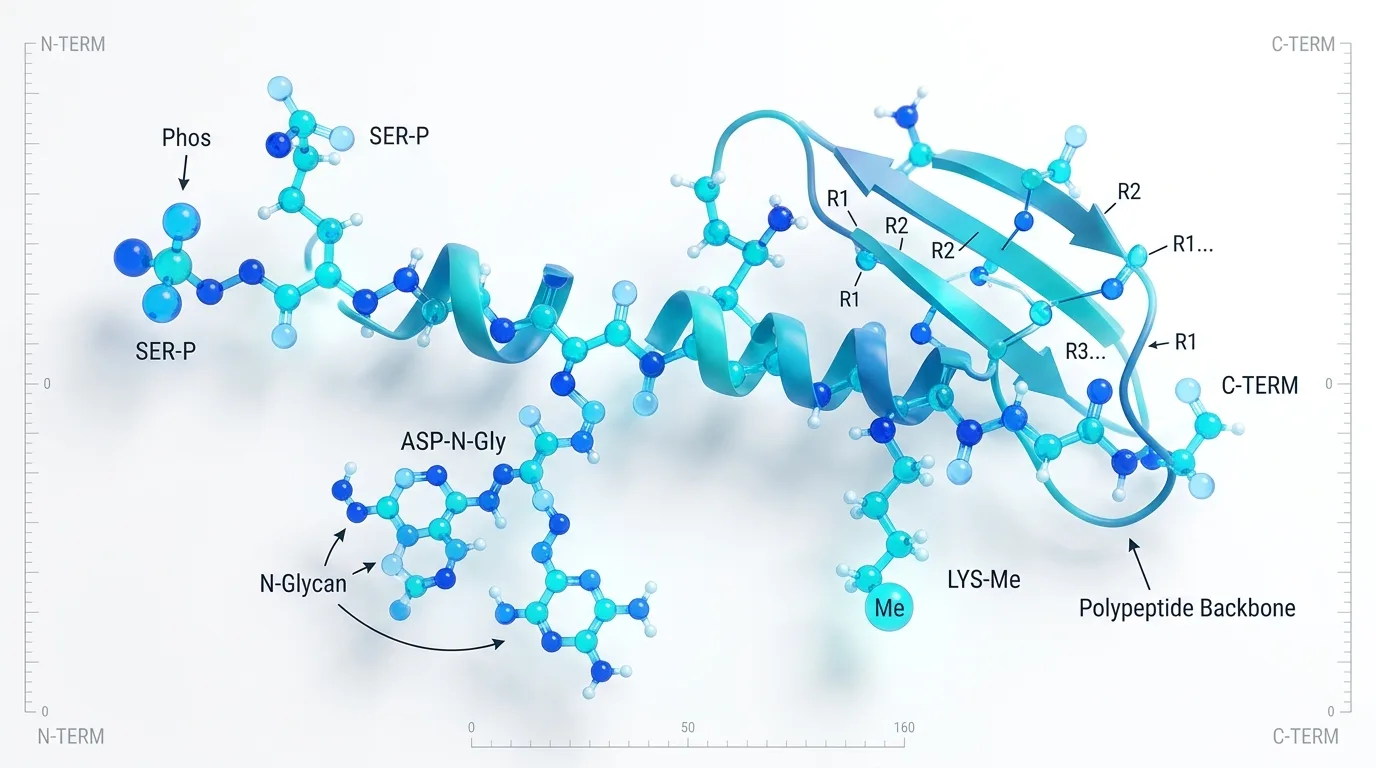
Native GHRH carries a plasma half-life of approximately 6 to 7 minutes. The culprit is DPP-IV, which cleaves the His-Ala dipeptide at the N-terminus with considerable efficiency, rendering the peptide biologically inactive almost as soon as it reaches circulation. For a therapeutic agent that must reach pituitary GHRH receptors in meaningful concentrations, a 6-minute half-life presents an obvious problem.
The trans-3-hexenoic acid conjugation at the N-terminus resolves this by sterically hindering DPP-IV access to the cleavage site. The result is a half-life of approximately 26 to 38 minutes, a four-to-six-fold improvement that makes once-daily subcutaneous dosing pharmacologically rational. The modification does not simply block degradation; it must simultaneously preserve the receptor-binding geometry required for biological activity at the GHRH receptor (GHRH-R).
GHRH-R belongs to the class B secretin-like family of G protein-coupled receptors. Binding architecture within this family assigns distinct roles to different peptide regions. Residues 1 to 3 at the N-terminus drive receptor activation, while residues 15 to 44 anchor high-affinity binding at the receptor's extracellular domain. The trans-3-hexenoic acid modification at His-1 must tolerate this dual requirement, preserving activation geometry while blocking enzymatic cleavage. That tesamorelin achieves both explains its therapeutic potency.
Positioning tesamorelin within the broader GHRH analogue landscape clarifies what makes it distinct. Sermorelin covers only GHRH residues 1 to 29 and carries a shorter half-life with a correspondingly attenuated GH secretory response. CJC-1295, modified with a Drug Affinity Complex (DAC) albumin-binding moiety, achieves a markedly longer half-life but produces a sustained GH elevation rather than discrete physiological pulses. Tesamorelin occupies a middle position: sermorelin half-life approximately 10 to 12 minutes; tesamorelin half-life approximately 26 to 38 minutes; CJC-1295 half-life approximately 6 to 8 days. These numbers highlight how each modification trades physiological fidelity against dosing convenience in different ways.
Mechanistic Pathway: From Injection to GH Release
Following subcutaneous injection, tesamorelin is absorbed into systemic circulation and transported to the anterior pituitary, where it binds GHRH-R on somatotroph cells. Receptor engagement initiates a cAMP/protein kinase A (PKA) intracellular signaling cascade that stimulates somatotrophs to synthesize and release growth hormone. GH pulse amplitude and frequency increase within hours of the first dose, establishing rapid axis engagement even at the outset of therapy.
The critical distinction here is how this GH release is regulated. Because tesamorelin operates through the hypothalamic-pituitary axis rather than bypassing it, somatostatin-mediated negative feedback remains fully intact. When GH levels rise, somatostatin release increases, dampening further GH secretion and maintaining the pulsatile secretory pattern characteristic of normal physiology. This feedback architecture serves as a built-in safety governor against GH overexposure.
Physiological pulsatility matters for two reasons beyond safety. First, pulsatile GH exposure produces more favorable receptor dynamics than sustained elevation, reducing the risk of receptor downregulation and tachyphylaxis over time. Second, pulse-regulated GH preserves tissue-level sensitivity at target organs, including the liver, which translates directly into predictable IGF-1 production rather than erratic hormonal signaling.
The IGF-1 Axis: Hepatic Production and Downstream Lipolysis
Once GH reaches the liver, it binds hepatic GH receptors and activates the JAK2/STAT5 signaling pathway. STAT5 phosphorylation drives nuclear translocation and directly upregulates IGF-1 gene transcription. The liver then synthesizes and secretes IGF-1 into systemic circulation, where it both mediates many of GH's peripheral effects and provides negative feedback to the hypothalamus and pituitary.
Clinical trials quantify this response precisely. Tesamorelin therapy typically raises IGF-1 levels by 61 to 91 µg/L from baseline, reflecting the cumulative effect of repeated daily GH stimulation on hepatic output. This magnitude of IGF-1 elevation is therapeutically meaningful but falls within ranges that require monitoring. Allowing IGF-1 to reach supraphysiological concentrations would invoke mitogenic risks, which is why periodic IGF-1 measurement is embedded in the standard monitoring protocol. The breakdown illustrates a tight therapeutic window between adequate axis stimulation and hormonal excess.
The fat-reducing effect of this GH/IGF-1 signal operates through two complementary lipolytic mechanisms. GH and IGF-1 together activate hormone-sensitive lipase (HSL) within adipocytes, the primary enzyme responsible for breaking down stored triglycerides into free fatty acids. Simultaneously, they suppress lipoprotein lipase (LPL), the enzyme that facilitates triglyceride uptake from circulation into adipocytes. The net effect is a shift from fat storage toward fat mobilization.
Visceral adipose tissue is considerably more responsive to this GH/IGF-1 lipolytic signal than subcutaneous fat. Visceral adipocytes express higher densities of GH receptors and exhibit greater sensitivity to catecholamine-mediated lipolysis, making them preferential targets when the GH axis is stimulated. This anatomical selectivity is not a side effect of tesamorelin therapy; it is a predictable consequence of the tissue biology, and it explains why tesamorelin produces meaningful VAT reduction without significant loss of subcutaneous fat or lean mass.
Phase III Clinical Trial Evidence: VAT Reduction Outcomes

The pivotal Phase III trials, LIPO-010 and LIPO-011, enrolled HIV-infected adults on stable antiretroviral therapy and randomized participants to tesamorelin 2 mg daily or placebo. After 26 weeks, tesamorelin-treated patients showed mean VAT reductions of 15 to 18% from baseline compared to placebo-treated controls, as measured by cross-sectional abdominal CT imaging. This degree of visceral fat reduction within a six-month treatment window represents a clinically meaningful metabolic outcome for a population at elevated cardiovascular risk.
The 2021 randomized controlled trial published in JAMA Network Open extended this evidence base by following HIV-infected adults through 52 weeks of treatment. VAT reductions of approximately 18% were sustained at one year, accompanied by maintained improvements in lipodystrophy-related quality-of-life metrics versus placebo. The trajectory data show robust response through 26 weeks followed by sustained benefit through week 52, with no evidence of progressive attenuation. These numbers highlight that tesamorelin's effect is durable when the therapy is continued, not simply a short-term response that dissipates with prolonged exposure.
Secondary cardiovascular outcomes added further clinical relevance. Tesamorelin reduced triglyceride levels by a mean of approximately 50 to 75 mg/dL across trial populations. Given that HIV-infected patients on antiretroviral therapy already carry elevated baseline triglycerides, this reduction provides a meaningful secondary benefit beyond the primary VAT endpoint. The breakdown illustrates two converging lines of cardiovascular benefit from a single intervention.
Notably, the trials documented no significant loss of subcutaneous fat or lean body mass, reinforcing what the mechanistic pharmacology predicts. The GH/IGF-1 axis selectively targets visceral adipocytes. That selectivity is not an artifact of trial design; it is a direct readout of the receptor biology described above.
Tesamorelin vs. Recombinant GH Therapy: A Mechanistic Comparison
Recombinant human growth hormone (rhGH) provides GH directly to circulation, bypassing the hypothalamic-pituitary regulatory axis entirely. The pituitary never receives a physiological stimulus; it simply observes elevated GH concentrations from an exogenous source. Because somatostatin feedback responds to circulating GH levels, rhGH administration does engage some degree of negative feedback, but the magnitude, timing, and pulsatility of the resulting GH exposure bear little resemblance to the endogenous pattern.
The clinical consequences of this architectural difference are measurable. rhGH therapy is associated with higher rates of IGF-1 overshoot, fluid retention, insulin resistance, and arthralgias than tesamorelin at therapeutically comparable doses. Each of these adverse effects reflects either direct pharmacological excess or the consequences of bypassing the hypothalamic governor that normally prevents GH from accumulating to supraphysiological levels.
Tesamorelin's somatostatin-mediated feedback loop acts as a constraint that rhGH simply does not have. When tesamorelin stimulates excessive GH release, somatostatin rises, blunts further secretion, and restores homeostasis. That self-correcting mechanism reduces both peak GH exposure and the risk of dose-dependent toxicity over extended treatment courses.
Structurally, the comparison distills to this. Tesamorelin mechanism: indirect, pulsatile, feedback-regulated GH stimulation. rhGH mechanism: direct, continuous, feedback-bypassing GH delivery. IGF-1 control with tesamorelin: governed by endogenous feedback. IGF-1 control with rhGH: dependent entirely on dose titration. Adverse event profile: tesamorelin shows lower rates of fluid retention and insulin resistance. Regulatory feedback integrity: present with tesamorelin, absent with rhGH. These numbers highlight that the safer profile of tesamorelin is mechanistically determined, not merely a statistical observation from clinical trials.
Safety Profile, Contraindications, and Monitoring Considerations
Clinical trial data characterize tesamorelin's adverse event profile with reasonable precision. Injection site reactions, including erythema, pruritus, and pain, occur in up to 24% of participants. Arthralgias affect approximately 13% of treated patients. Fluid retention or peripheral edema appears in roughly 6% of cases. Dose-dependent fasting glucose elevation is also documented, consistent with GH-mediated insulin resistance, and warrants monitoring in patients with pre-existing metabolic risk. The breakdown illustrates that injection site reactions dominate the adverse event profile, with systemic effects occurring at lower frequencies.
Absolute contraindications reflect the mitogenic biology of the GH/IGF-1 axis. Active or suspected malignancy represents a firm barrier to tesamorelin use, given the well-established role of IGF-1 in promoting cell proliferation. Disruption of the hypothalamic-pituitary axis, whether from hypophysectomy, head trauma, or pituitary tumor, renders tesamorelin mechanistically inert and should preclude its use. Pregnancy is categorized as contraindicated (Category X), and known hypersensitivity to GHRH or formulation components is an obvious exclusion.
Drug interactions center on two mechanisms. Tesamorelin-driven GH elevation competes for corticosteroid-binding globulin, which can suppress measured cortisol levels in serum assays, potentially complicating adrenal function assessment. GH-axis activation also alters the metabolism of drugs processed through cytochrome P450 enzymes, with particular relevance for agents with narrow therapeutic indices such as cyclosporine or certain anticonvulsants.
Recommended monitoring parameters include periodic IGF-1 levels to avoid supraphysiological elevation, fasting glucose to track insulin resistance trends, and routine injection site assessment. The FDA discontinued tesamorelin's Risk Evaluation and Mitigation Strategy (REMS) program in 2014 after post-marketing surveillance data confirmed an acceptable risk-benefit profile without the additional oversight infrastructure.
Off-Label Research and Emerging Applications
Beyond HIV lipodystrophy, tesamorelin has attracted investigational interest in two adjacent areas. Research in aging adults and individuals with mild cognitive impairment has demonstrated that a 20-week course of tesamorelin produced significant improvements in executive function and verbal memory scores compared to placebo. Separately, findings from some of these trials suggest potential reductions in amyloid-beta accumulation, a finding with obvious implications for neurodegenerative disease research, though the mechanisms remain under investigation.
These findings sit within a broader expansion of the peptide therapeutics market. The global market was valued at approximately USD 40 billion in 2022 and is projected to grow at a compound annual growth rate of 7 to 9% through 2030. GHRH analogues represent a specialized but expanding segment within that trajectory, driven by metabolic disease management and aging biology research. These numbers highlight a commercial and scientific momentum that will likely generate additional clinical data on tesamorelin's off-label potential over the coming decade. All off-label applications remain investigational and require further validation before clinical adoption.
Tesamorelin's efficacy in reducing visceral fat in HIV-associated lipodystrophy is not incidental. It is the direct product of a precisely engineered mechanistic cascade. The trans-3-hexenoic acid modification stabilizes the molecule long enough to stimulate pituitary GHRH receptors, initiating pulsatile GH release that remains under physiological somatostatin governance. That GH signal drives hepatic IGF-1 production and selectively activates lipolysis within visceral adipose tissue, producing the 15 to 18% VAT reductions documented in Phase III trials. By preserving the body's own regulatory architecture rather than overriding it, tesamorelin represents a more physiologically coherent intervention than recombinant GH therapy, a distinction with direct consequences for both efficacy and tolerability. For clinicians managing HIV lipodystrophy and for informed patients evaluating their options, understanding this mechanistic pathway explains why tesamorelin works, for whom it works best, and where its boundaries lie.
Sources
- nih.gov — pubmed.ncbi.nlm.nih.gov
- patsnap.com — synapse.patsnap.com
- i-base.info — i-base.info
- oup.com — academic.oup.com
- lww.com — journals.lww.com
- mdedge.com — mdedge.com
- medthority.com — medthority.com
- nih.gov — pubmed.ncbi.nlm.nih.gov
- mdpi.com — mdpi.com
- nih.gov — pmc.ncbi.nlm.nih.gov
- pcom.edu — digitalcommons.pcom.edu
- substack.com — staycuriousmetabolism.substack.com
- hopkinsguides.com — hopkinsguides.com
- withpower.com — withpower.com
- aidsmap.com — aidsmap.com
- tandfonline.com — tandfonline.com
- harvard.edu — hms.harvard.edu
- oup.com — academic.oup.com
- eatg.org — eatg.org
- contagionlive.com — contagionlive.com