
Non-alcoholic steatohepatitis, now formally designated metabolic dysfunction-associated steatohepatitis (MASH) following a 2023 nomenclature update, has frustrated therapeutic development for decades. The disease is fundamentally metabolic in origin, yet approved treatments that target its core drivers simultaneously have remained elusive. Retatrutide NASH liver disease research is gaining momentum precisely because this investigational peptide, developed by Eli Lilly under the designation LY3437943, operates through three distinct receptor pathways at once. Rather than addressing a single node in a complex metabolic network, it engages GLP-1R, GIPR, and GCGR simultaneously, creating a pharmacological profile that maps onto MASH pathophysiology in ways no prior single molecule has achieved. This article examines the mechanistic rationale for that alignment, what Phase 2 data already suggests about hepatic benefit, and what prospective MASH trials would need to demonstrate for retatrutide to cross from promising metabolic drug to validated liver therapy.
Why NASH/MASH Remains a Critical Unmet Medical Need
MASH represents the progressive, inflammatory form of metabolic dysfunction-associated steatotic liver disease (MASLD), the condition previously known as non-alcoholic fatty liver disease. In MASH, simple hepatic fat accumulation, called steatosis, advances into hepatocellular injury, lobular inflammation, and eventually fibrosis. Without intervention, a meaningful proportion of patients progress to cirrhosis and hepatocellular carcinoma. The 2023 nomenclature shift from NASH to MASH was not merely cosmetic; it reflected consensus that the metabolic origins of the disease, rather than alcohol exclusion, should define its identity.
Global prevalence estimates place MASLD at approximately 25% of the adult population, with MASH affecting an estimated 3 to 5% globally. Of those with MASH and advanced fibrosis (stage F3 or F4), progression to cirrhosis within a decade occurs in roughly 20% of cases, and hepatocellular carcinoma risk increases significantly beyond that threshold. These numbers highlight why the absence of any approved pharmacotherapy targeting MASH's root pathology, as of 2024, represents a serious public health gap. Resmetirom received FDA approval in 2024 specifically for MASH with fibrosis, marking the first such approval, but the therapeutic landscape remains far from complete.
Three interrelated metabolic processes drive MASH progression. First, insulin resistance causes hyperinsulinemia and promotes de novo lipogenesis in the liver. Second, excess hepatic lipogenesis converts glucose and acetate into fatty acids that accumulate as triglycerides within hepatocytes. Third, impaired hepatic fat oxidation means the liver cannot adequately clear accumulated lipid through beta-oxidation. Effective MASH therapy must address all three. That is precisely why metabolic therapies, rather than purely liver-targeted agents, have become scientifically compelling.
Retatrutide's Triple Mechanism: A Pharmacological Map and Role in Retatrutide NASH Liver Disease Research
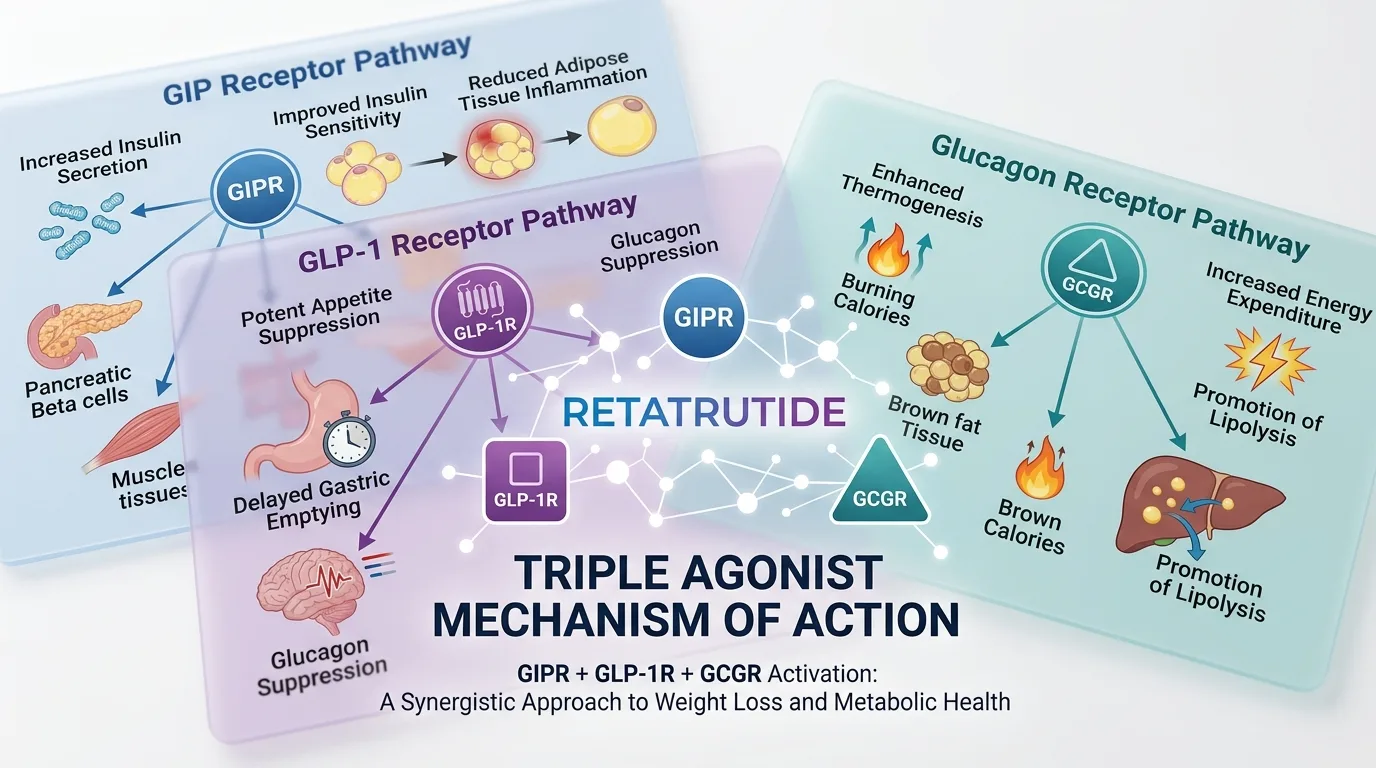
Retatrutide is a synthetic acylated peptide engineered from a modified glucagon analog backbone. Its amino acid sequence achieves high potency at GLP-1R and GIPR while retaining meaningful activity at GCGR, making it the first clinically advanced molecule to simultaneously engage all three of these metabolically critical G protein-coupled receptors. Understanding each receptor's contribution is essential to grasping why this architecture is particularly relevant to MASH.
GLP-1R agonism drives glucose-dependent insulin secretion, suppresses glucagon release, slows gastric emptying, and reduces appetite through central nervous system pathways. These effects reduce hepatic glucose output and improve systemic insulin sensitivity, directly addressing the hyperinsulinemia that fuels hepatic lipogenesis. GIPR agonism was historically viewed skeptically in obesity pharmacology, but tirzepatide and retatrutide have fundamentally revised that view. GIPR activation in adipose tissue and the central nervous system synergizes with GLP-1R agonism to reduce food intake and fat storage, while also appearing to attenuate GLP-1R-mediated nausea, a tolerability advantage with real implications for patient adherence in chronic conditions.
GCGR agonism is the pharmacological feature that most sharply distinguishes retatrutide from both semaglutide and tirzepatide. Glucagon receptor activation increases basal metabolic rate, stimulates hepatic fatty acid beta-oxidation, and promotes lipolysis in adipose tissue. These effects are specifically relevant to clearing established hepatic steatosis, not merely preventing further fat accumulation. From a structural chemistry standpoint, retatrutide incorporates a C18 fatty diacid moiety attached via a linker to a lysine residue in its backbone, enabling reversible serum albumin binding that extends plasma half-life to approximately one week and supports once-weekly subcutaneous dosing. This extended engagement is clinically important for a chronic disease like MASH, where consistent receptor activation over months to years is required to achieve meaningful histological change.
How Each Receptor Pathway Targets MASH Pathophysiology
Mapping each receptor pathway to specific MASH mechanisms clarifies why the triple combination generates pharmacological effects that single or dual agonism cannot fully replicate. GLP-1R agonism reduces hepatic lipogenesis indirectly but powerfully. By improving insulin sensitivity, it suppresses the hyperinsulinemic signaling that upregulates sterol regulatory element-binding protein 1c (SREBP-1c), the transcription factor most responsible for driving de novo lipogenesis. Less insulin-driven lipogenic signaling means less hepatic fat production at the source.
GIPR agonism contributes through a distinct mechanism. By reducing lipolysis in adipose tissue, GIPR activation lowers the flux of free fatty acids entering the portal circulation. Since portal free fatty acid delivery is one of the primary substrates for hepatic triglyceride synthesis, reducing this flux directly limits hepatic fat substrate availability. This is an upstream intervention that complements the downstream lipogenesis suppression achieved through GLP-1R pathways.
GCGR agonism addresses the third pathological driver most directly. Glucagon receptor activation in hepatocytes stimulates peroxisome proliferator-activated receptor alpha (PPAR-alpha) activity and increases mitochondrial fatty acid beta-oxidation, essentially enhancing the liver's capacity to burn accumulated fat. Preclinical animal model data showed that triple GLP-1R/GIPR/GCGR agonism produced significantly greater reductions in hepatic steatosis than dual agonism alone, providing the mechanistic foundation for what Phase 2 human data would later suggest. The additive and potentially synergistic nature of these three pathways operating simultaneously is the central scientific argument for retatrutide's potential in MASH.
Phase 2 Weight Loss Data and What It Implies for Liver Fat

The Phase 2 trial of retatrutide (NCT04881760) enrolled 338 adults with obesity or overweight plus at least one weight-related comorbidity, testing dose arms of 1 mg, 4 mg, 8 mg, and 12 mg weekly against placebo over 48 weeks. Results published in the New England Journal of Medicine in 2023 showed clear dose-dependent weight reduction across all active arms. The 12 mg arm achieved a mean body weight loss of 24.2%, the highest percentage ever reported in a randomized controlled trial of a pharmacological anti-obesity agent.
To contextualize that figure: semaglutide 2.4 mg achieved approximately 15% mean weight loss at 68 weeks in the STEP 1 trial, and tirzepatide 15 mg achieved approximately 22.5% at 72 weeks in SURMOUNT-1. Retatrutide at 12 mg reached 24.2% in just 48 weeks. The breakdown illustrates a clear generational progression in pharmacological weight loss efficacy, from GLP-1R monoagonists, to dual agonists, to triple agonists.
The connection between these weight loss figures and hepatic benefit is not speculative. Clinical data from GLP-1R agonist trials consistently shows that body weight reductions of 5 to 10% produce significant declines in liver fat content as measured by magnetic resonance imaging-based proton density fat fraction. Weight loss of 10% or more correlates with histological improvement in NASH resolution in a meaningful proportion of patients. Retatrutide's 24.2% mean weight reduction at 48 weeks implies a degree of hepatic fat mobilization that would likely exceed anything documented with prior pharmacological agents, particularly when combined with the direct hepatic beta-oxidation effects of GCGR agonism.
The Phase 2 trial also reported metabolic improvements directly relevant to MASH severity. HOMA-IR, the standard clinical proxy for insulin resistance, fell significantly across active dose arms. Triglycerides declined substantially. HbA1c was reduced by up to 2.02 percentage points in participants with elevated baseline glucose. All of these parameters correlate mechanistically with MASH progression, meaning their improvement represents more than cardiovascular benefit. These numbers highlight a systemic metabolic recalibration that addresses MASH's root drivers at multiple levels simultaneously.
Current Trial Landscape: Is Retatrutide Being Studied in MASH?
As of 2024, direct MASH-specific clinical data for retatrutide remains limited. Eli Lilly has initiated the Phase 3 TRIUMPH program for obesity, with results anticipated in 2025 to 2026, and separate Phase 3 evaluation in type 2 diabetes is also underway. Whether MASH-specific histological endpoints are embedded within Phase 3 arms or will require a dedicated liver disease trial represents a key question the field is watching closely.
The distinction between indirect liver benefit inferred from metabolic data and direct histological MASH endpoints is scientifically critical. Regulatory agencies require biopsy-confirmed evidence of MASH resolution or fibrosis improvement to support a liver-specific indication. The benchmarks are specific. MASH resolution without worsening of fibrosis, and fibrosis improvement by at least one stage on biopsy using validated scoring systems such as the NASH Clinical Research Network (CRN) scale, represent the gold standard endpoints. Non-invasive measures including liver stiffness by vibration-controlled transient elastography, serum ALT normalization, and the enhanced liver fibrosis (ELF) score are increasingly discussed as surrogate endpoints, though regulatory acceptance remains evolving.
The precedents set by semaglutide's NASH trial and resmetirom's MAESTRO-NASH trial provide the methodological framework any retatrutide MASH study would likely follow. MAESTRO-NASH, which underpinned resmetirom's 2024 FDA approval, required 52-week biopsy-confirmed MASH resolution or fibrosis improvement as co-primary endpoints. A retatrutide MASH trial would need comparable rigor, likely requiring 48 to 72 weeks of treatment before biopsy-based assessment, with the added complexity that higher baseline weight loss in the retatrutide arms could itself confound histological staging.
Cardiovascular and Systemic Benefits: Contextualizing the Full Risk Profile in MASH Patients
MASH does not exist in clinical isolation. Patients with MASH carry substantially elevated cardiovascular risk, driven by the same insulin resistance, dyslipidemia, and systemic inflammation that promotes hepatic disease. Cardiovascular events, not liver failure, remain the leading cause of mortality in MASH patients with early-stage fibrosis. This makes retatrutide's cardiovascular effects directly relevant to the MASH population, not merely an ancillary benefit.
Phase 2 data demonstrated statistically significant reductions in systolic blood pressure, triglycerides, and waist circumference compared to placebo across active dose arms. These improvements occur in concert with the hepatic metabolic effects, suggesting the same mechanistic drivers producing liver benefit also reduce cardiovascular risk burden. GCGR agonism may contribute an additional lipid benefit through a separate pathway. Glucagon receptor activation increases hepatic LDL receptor expression, which could independently improve atherogenic lipid profiles beyond what weight loss and insulin sensitization alone achieve.
Critically, retatrutide does not yet have cardiovascular outcomes trial (CVOT) data. This parallels the development pathway semaglutide followed before the SELECT trial demonstrated significant cardiovascular event reduction in adults with obesity. The absence of CVOT data does not diminish retatrutide's metabolic signals, but it does represent a data gap that regulators and prescribers will eventually require to be filled, particularly for a chronic disease population with high cardiovascular comorbidity burden.
Tolerability, Safety, and MASH-Specific Considerations
Retatrutide's Phase 2 safety profile was consistent with GLP-1R agonist class effects. Gastrointestinal adverse events, including nausea, vomiting, diarrhea, and constipation, were the most frequently reported, predominantly mild to moderate in severity, and more prevalent with higher doses and faster escalation schedules. These events generally diminished with continued treatment, consistent with the established tolerability pattern of this drug class.
The GIPR component may offer a meaningful tolerability advantage. Preclinical and clinical evidence suggests GIPR co-agonism attenuates GLP-1R-mediated nausea, potentially through central nervous system mechanisms. For MASH patients, who often carry comorbid type 2 diabetes and obesity requiring long-term pharmacotherapy, GI tolerability is not a minor consideration. Adherence over 48 to 72 weeks, the timeframe required for histological endpoints, depends substantially on how manageable side effects remain through the treatment course.
From a liver-specific safety standpoint, glucagon receptor agonism raises a theoretical consideration worth noting. Glucagon promotes hepatic glucose output, which could theoretically introduce glycemic variability concerns in certain patient populations. However, because retatrutide's GLP-1R and GIPR components powerfully enhance insulin secretion in a glucose-dependent manner, this glucagon-mediated glucose effect appears to be counterbalanced in practice. No significant hepatotoxicity signals emerged in Phase 2 data, and ALT monitoring remains a standard component of ongoing trial protocols.
What Needs to Happen Next: The Path from Metabolic Drug to MASH Therapy
The regulatory and clinical pathway from retatrutide's current metabolic drug profile to a validated MASH therapy requires specific milestones. A Phase 3 MASH-specific trial, whether as a standalone study or as a designated arm within the TRIUMPH program, would need to enroll patients with biopsy-confirmed MASH and collect histological endpoints at 48 to 72 weeks. Co-primary endpoints of MASH resolution without fibrosis worsening and at least one-stage fibrosis improvement represent the regulatory standard established by resmetirom's approval pathway.
Several scientific questions remain genuinely open. Whether GCGR-mediated hepatic fat oxidation translates to fibrosis regression, rather than steatosis improvement alone, is not yet established in humans. Steatosis and fibrosis are distinct pathological processes. Fat clearance from hepatocytes is a necessary but insufficient condition for fibrosis reversal, which also requires resolution of hepatocellular injury and suppression of stellate cell activation. Whether retatrutide's systemic metabolic improvements create the right hepatic environment for fibrosis regression is a question only biopsy-confirmed data can answer.
The competitive landscape for MASH is evolving rapidly. Resmetirom holds the first-mover advantage as the only approved MASH-specific pharmacotherapy as of 2024. Lanifibranor and other agents are advancing through trials. Retatrutide's potential position in this landscape could be as monotherapy for MASH patients who also carry obesity and type 2 diabetes, where its ability to address all three conditions through a single mechanism represents a compelling clinical proposition. Combination strategies with liver-targeted agents like resmetirom are also scientifically plausible, though they await dedicated investigation.
If Phase 3 data confirm histological benefit in MASH, retatrutide could become the first agent capable of simultaneously treating obesity, type 2 diabetes, and MASH through a unified pharmacological mechanism. That convergence would represent a landmark shift in how metabolic medicine approaches three conditions that share the same pathological root but have historically required separate therapeutic strategies. For anyone following retatrutide NASH liver disease research, the transition from Phase 2 metabolic signals to Phase 3 histological proof is where the field's most consequential data will emerge. Researchers, clinicians, and informed observers would do well to watch that space closely.
Retatrutide's triple agonist architecture creates a mechanistic alignment with MASH pathophysiology that no prior approved pharmacotherapy has achieved in a single molecule. Its Phase 2 data provide a compelling indirect case for hepatic benefit, grounded in the strongest weight loss outcomes ever recorded in a pharmacological obesity trial, alongside improvements in insulin resistance, triglycerides, and glycemic control. The missing piece is prospective, biopsy-confirmed evidence from MASH-specific trials. If that data materializes in Phase 3, this molecule will warrant serious consideration not only as a superior weight loss agent, but as the most mechanistically comprehensive treatment the MASH patient population has yet encountered.
Sources
- nih.gov — pubmed.ncbi.nlm.nih.gov
- nih.gov — pmc.ncbi.nlm.nih.gov
- retatrutidescript.com — retatrutidescript.com
- fattyliver.ca — fattyliver.ca
- amcp.org — amcp.org
- clevelandclinic.org — my.clevelandclinic.org
- prnewswire.com — prnewswire.com
- xiahepublishing.com — xiahepublishing.com
- mdpi.com — mdpi.com
- clinicaltrials.gov — clinicaltrials.gov
- retatrutide.med — retatrutide.med
- ucsd.edu — clinicaltrials.ucsd.edu
- careboxhealth.com — lilly-next.careboxhealth.com
- patientcareonline.com — patientcareonline.com