
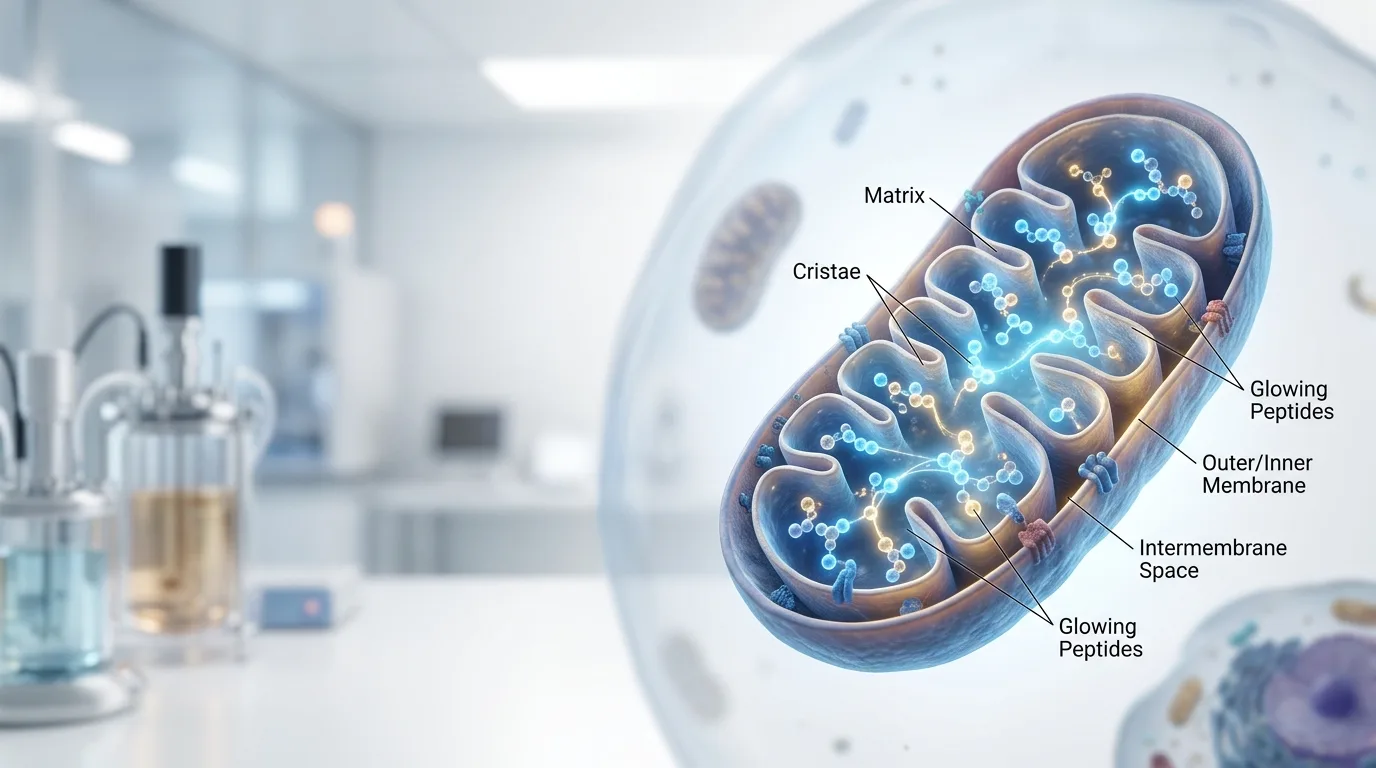
Most peptide stack guides cover the same familiar territory: growth hormone secretagogues, tissue-repair peptides, immune modulators. The protocols get refined, the timing gets optimized, and the receptor-conflict analysis gets more sophisticated. But one entire class of biologically active peptides is conspicuously absent from almost every stacking discussion. Mitochondria-derived peptides, specifically MOTS-c and Humanin, represent a genuinely new category in peptide combination science, and the case for including them in a serious longevity stack rests on something more durable than enthusiasm. It rests on mechanism.
The humanin and MOTS-c longevity peptide stack benefits that some proponents theorize derive from signaling pathways that simply do not overlap with the axes targeted by conventional stacks. MOTS-c activates AMPK. Humanin signals through a tripartite receptor complex to activate STAT3. Neither pathway competes with GH receptor systems, ghrelin receptors, or TLR-mediated immune signaling. That orthogonality is the central argument, and this article unpacks it systematically.
To understand why these peptides are different, it helps to start with a paradigm shift in how we think about mitochondria. These organelles are no longer best described purely as cellular power plants. A growing body of research frames them as endocrine signaling organelles, capable of encoding and secreting peptides that communicate with distant tissues. That reframing has significant implications for how longevity-focused researchers should approach stack design.
What Are Mitochondria-Derived Peptides and Their Humanin and MOTS-c Longevity Peptide Stack Benefits?
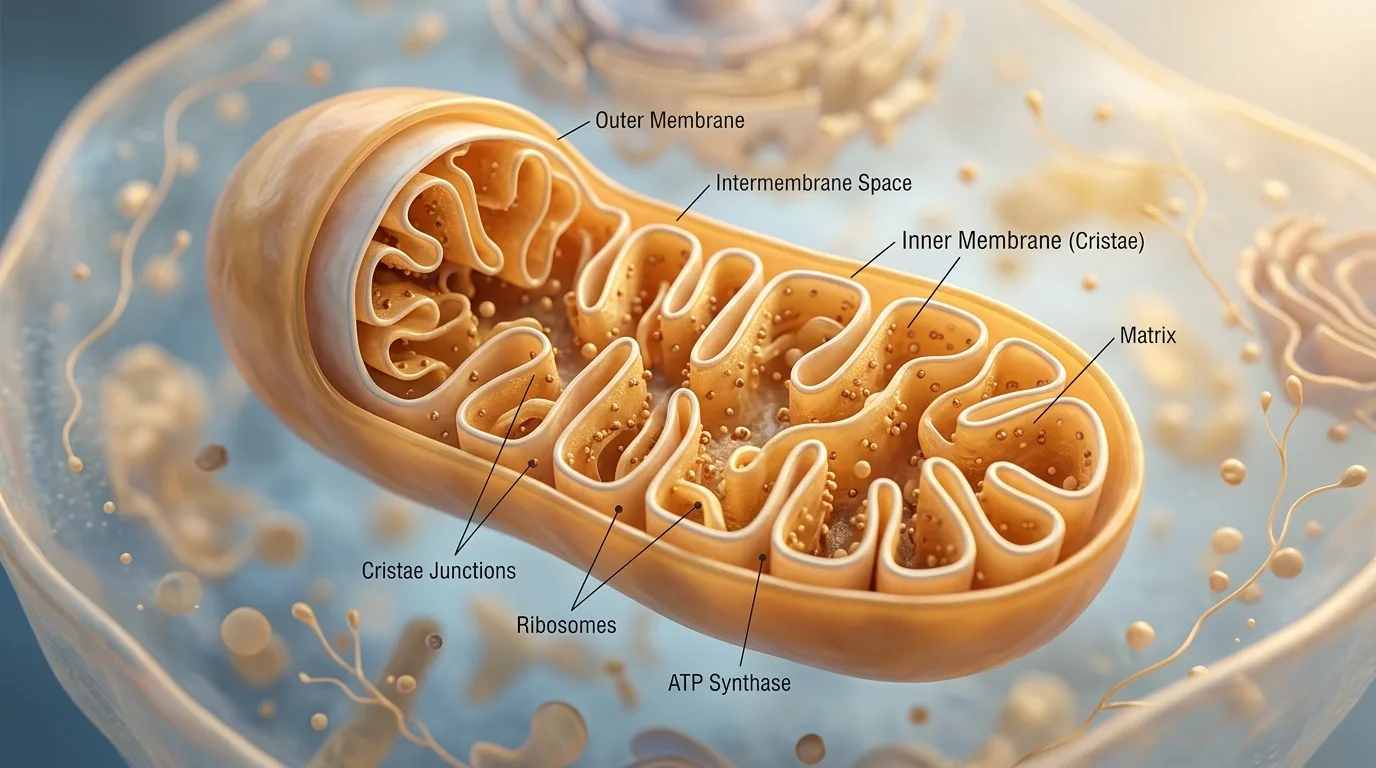
Mitochondria-derived peptides (MDPs) are a class of small peptides encoded within the mitochondrial genome itself, rather than the nuclear genome. MOTS-c is 16 amino acids long and encoded within the 12S rRNA gene of mitochondrial DNA. Humanin, discovered earlier, is encoded in the 16S rRNA region and is somewhat longer. Both are now recognized as functional signaling molecules with systemic effects on metabolism, stress response, and cellular survival.
The paradigm shift here is significant. For decades, mitochondria were characterized by their role in oxidative phosphorylation and ATP production. The discovery that they encode and release peptides with endocrine-like functions reframes them as active participants in intercellular communication. Circulating MOTS-c levels decline with age in both rodent and human observations, which positions MDPs as relevant actors in the biology of aging rather than incidental metabolic byproducts.
Contrasting MDPs with conventionally synthesized peptides clarifies why they warrant separate mechanistic treatment. Consider three peptides side by side. MOTS-c: 16 amino acids, mitochondrial genome origin, primary signaling via AMPK activation and nuclear translocation. Humanin: approximately 24 amino acids, mitochondrial genome origin, primary signaling via CNTFR/WSX-1/gp130 receptor complex and STAT3. BPC-157: 15 amino acids, synthetically derived from human gastric juice sequence, primary signaling via GH receptor upregulation, VEGF, and nitric oxide pathways. The origins differ, the receptor targets differ, and the downstream effectors differ completely. These numbers highlight why lumping MDPs with conventional repair peptides misrepresents their biology.
MOTS-c: AMPK Activation and Metabolic Signaling
MOTS-c's mechanism begins at the mitochondria but extends into the nucleus. Upon cellular stress or metabolic perturbation, MOTS-c translocates to the nucleus, where it regulates gene expression programs associated with metabolic homeostasis. The key downstream effector is AMP-activated protein kinase, or AMPK, a master regulator of cellular energy sensing. AMPK activation drives glucose uptake independent of insulin signaling, stimulates mitochondrial biogenesis, and suppresses anabolic processes that consume ATP.
In rodent models, exogenous MOTS-c administration has shown improvements in insulin sensitivity and exercise performance. High-fat diet mouse models treated with MOTS-c demonstrate reduced fat accumulation and improved glucose tolerance relative to controls. Aged mice receiving MOTS-c supplementation show partial restoration of exercise capacity, suggesting a role in counteracting the metabolic decline associated with aging. These findings make MOTS-c relevant to any stack designed around metabolic optimization or longevity.
The intersection with GH/IGF-1 signaling is where stack design gets genuinely interesting. IGF-1 downstream signaling activates mTOR, the mammalian target of rapamycin, which drives protein synthesis and cellular growth. AMPK, by contrast, acts as a partial brake on mTOR activity, particularly under energy-deplete conditions. At high simultaneous activation, AMPK and mTOR are partially antagonistic. This creates a timing consideration: administering MOTS-c immediately alongside a GH secretagogue pulse that is driving IGF-1 may partially blunt the anabolic signal. Separating MOTS-c administration to morning hours, when AMPK sensitivity and insulin sensitivity naturally vary with circadian rhythms, while reserving GH secretagogue use for pre-sleep pulsatile windows, represents a logical timing framework. The breakdown illustrates why humanin and MOTS-c longevity peptide stack benefits depend not just on what is stacked, but when.
Humanin: STAT3 Signaling and Cytoprotective Activity
Humanin operates through a mechanistically distinct receptor system. Its primary receptor complex consists of three subunits: CNTFR (ciliary neurotrophic factor receptor), WSX-1, and gp130. This tripartite assembly activates the JAK/STAT pathway, specifically STAT3, a transcription factor with broad roles in cellular survival, anti-apoptotic signaling, and inflammatory regulation. None of these receptor components overlap with GH secretagogue receptor systems or the ghrelin receptor (GHS-R1a).
Humanin's functional profile is cytoprotective. In neuronal tissues, it suppresses apoptosis induced by amyloid-beta and other proteotoxic stressors. In metabolic tissues, animal studies show it protects against age-related decline in insulin-sensitive tissues and reduces markers of oxidative stress. When combined with caloric restriction mimetics in animal models, Humanin's protective effects on metabolic outcomes appear additive, suggesting the STAT3 pathway contributions are independent of the energy-sensing pathways targeted by caloric restriction approaches.
Distinguishing Humanin from immunomodulatory peptides like Thymosin alpha-1 clarifies the non-overlap further. Thymosin alpha-1 enhances T-cell maturation and NK cell activity through TLR signaling pathways. It does not activate gp130 or STAT3 in the same context. Humanin does not drive T-cell maturation or TLR-dependent innate immune responses. The two peptides operate in adjacent but non-competing biological spaces. For stack designers asking how do mitochondrial peptides like MOTS-c fit into a peptide stack, the answer begins with confirming that each component occupies a distinct mechanistic lane, and Humanin occupies one that is genuinely uncrowded.
Why Mitochondrial Peptides Fit GH Axis Stacks
The logic of combining MDPs with GH axis peptides follows what might be called a parallel-but-intersecting-nodes model. GHRH analogs like CJC-1295 drive GH pulse amplitude through the GHRH receptor, elevating downstream IGF-1 by 1.5 to 3-fold in documented clinical pharmacology. MOTS-c's AMPK axis modulates insulin sensitivity and cellular energy state independently. Both pathways ultimately converge on metabolic outcomes, specifically glucose utilization, fat oxidation, and tissue anabolism, but they do so through receptor systems that do not compete for the same binding site.
The AMPK/mTOR tension deserves direct treatment rather than dismissal. GH secretagogue stacks benefit from the anabolic output of elevated IGF-1 and the mTOR activation it produces. AMPK's partial suppression of mTOR is a real consideration. The resolution is not to avoid combining these agents, but to stage their administration. Pre-sleep GHRH/GHRP dosing captures the natural pulsatile GH surge amplified by these secretagogues. Morning MOTS-c administration, when circadian AMPK sensitivity is higher and the acute mTOR stimulus from the previous night's GH pulse has partially subsided, minimizes the antagonism while preserving both mechanisms.
Humanin presents no analogous tension with GH axis peptides. Its gp130/STAT3 axis does not intersect with GHS-R1a or GHRH receptor systems at any point in the signaling cascade. Adding Humanin to a CJC-1295 plus ipamorelin stack introduces a cytoprotective and anti-apoptotic layer without competing for receptor occupancy or compounding desensitization risk. GHS-R1a desensitization, which can occur within 48 to 72 hours of continuous non-pulsatile GHRP administration, is a GHRP-specific concern. MDPs do not act on this receptor and do not contribute to its downregulation.
Stacking Humanin and MOTS-c with Repair Peptides

Questions about what peptides work well together in a stack often center on repair-oriented compounds like BPC-157 and TB-500. BPC-157 signals through GH receptor upregulation, VEGF, and nitric oxide pathways. TB-500 and its active fragment Ac-SDKP promote actin polymerization, cellular migration, and vascular repair. Neither compound shares receptor targets with MOTS-c or Humanin. The mechanistic lanes remain separate.
There is a practical pharmacokinetic advantage worth noting. BPC-157 retains bioactivity when administered orally in animal models, attributable to its resistance to gastric peptidases. MDPs require subcutaneous delivery. An oral BPC-157 and subcutaneous MOTS-c or Humanin protocol involves no absorption-site collision, which simplifies the logistics of a combined administration schedule.
The conceptual case for combining Humanin's cytoprotective STAT3 signaling with BPC-157's tissue-repair activity in contexts of metabolic aging or recovery is coherent on mechanistic grounds. Humanin reduces cellular apoptosis and oxidative stress; BPC-157 accelerates structural tissue repair and vascular healing. These outputs are complementary. The honest caveat is that direct combinatorial studies examining MDPs alongside repair peptides do not currently exist in the published literature. Every claim about additive potential at this level of specificity is mechanistic inference, not empirical demonstration.
Preclinical Evidence Base: What the Data Actually Show
The evidence base for MDPs is real but bounded. For MOTS-c, rodent model data show measurable improvements in insulin sensitivity, with high-fat diet models demonstrating glucose tolerance improvements and reductions in metabolic dysregulation markers. Exercise performance studies in aged mice have shown partial restoration of physical capacity with MOTS-c supplementation. These are meaningful preclinical signals.
For Humanin, animal studies demonstrate protective effects against age-related metabolic decline, with the additive effects observed when Humanin is combined with caloric restriction mimetics representing some of the more intriguing combination data available. Outcome metrics across treatment groups, including measures of insulin resistance, inflammatory markers, and cell viability under stress conditions, show Humanin-treated animals outperforming controls on multiple axes. These numbers highlight a cytoprotective benefit that appears mechanistically robust even if it has not been confirmed in human trials.
The evidence ceiling must be stated plainly. No human clinical trials have specifically examined MOTS-c or Humanin in peptide stacking contexts. The mechanistic compatibility argument reviewed here is built on pathway orthogonality and preclinical signal, not clinical proof. This contrasts with the comparatively stronger clinical pharmacology data for GH secretagogue combinations. CJC-1295 alone produced documented 2 to 10-fold GH elevations above baseline in a 2006 clinical trial, with IGF-1 increases of 1.5 to 3-fold sustained for up to six days post-dose. That is clinical-grade quantitative data. MOTS-c and Humanin are several evidence tiers below that benchmark. Accurate stack-design thinking requires holding both the mechanistic promise and the evidence gap simultaneously.
Practical Stack Design Considerations
Administration route logistics align reasonably well for MDP-inclusive stacks. MDPs are delivered subcutaneously, which places them in the same delivery category as GHRPs and GHRH analogs. The subcutaneous injection site is not a limiting factor for co-administration on separate schedules. Oral BPC-157 protocols, when used, introduce no site competition with subcutaneous MDP delivery.
Receptor desensitization risk does not compound when MDPs are added to a GHRP stack. GHS-R1a downregulation from continuous GHRP stimulation is a GHRP-specific pharmacodynamic issue. MOTS-c and Humanin act on entirely different receptor systems, so their addition to a GHRP-containing stack neither accelerates nor alleviates desensitization of the ghrelin receptor. This is a genuine practical advantage.
Peptide mixing stability is a non-trivial consideration. Peptides with different isoelectric points risk precipitation when combined in a single syringe due to charge neutralization. GHRPs are generally stable at pH 5.5 to 6.5, while some thymosin derivatives require slightly alkaline conditions. MDPs should be researched for isoelectric point and pH stability before mixing with co-administered peptides in a single injection. Absent specific compatibility data, separate injections at separate sites are the more defensible protocol approach. Staged introduction of individual peptides, with monitoring between additions, remains the responsible framework for any complex stack.
Where Mitochondrial Peptides Fit the Longevity Stack Frontier
Situating MDPs within the broader longevity peptide landscape reveals a consistent pattern. Epithalon, a synthetic tetrapeptide with proposed telomerase-activating and cortisol-normalizing activity, operates through downstream pathways that do not conflict with GH secretagogue systems, and it is frequently included in longevity-oriented stacks despite limited direct interaction data. MDPs occupy a comparable position: mechanistically non-conflicting, preclinically supported, and clinically unproven at the combination level.
The frontier context matters here. Longevity stacks in advanced research circles increasingly blend peptides with small molecules. NNMT inhibitors like 5-amino-1MQ are co-administered with metabolic peptides in hybrid protocols that blur the boundary between peptide and small-molecule pharmacology. MDPs fit naturally into this hybrid frontier. Their mitochondrial origin and AMPK/STAT3 signaling axes do not conflict with NNMT inhibition, caloric restriction mimetics, or the GH axis peptides that anchor most existing longevity stacks.
The unique value proposition of MDPs for stack designers is precisely their signaling real estate. AMPK and STAT3/gp130 activation: two orthogonal axes that do not occupy GH receptor, ghrelin receptor, or TLR pathways. Among the peptides available for longevity-oriented stacking, few offer this degree of mechanistic addability without receptor-conflict risk. The humanin and MOTS-c longevity peptide stack benefits are not yet clinically quantified, but their mechanistic compatibility with existing stack architectures is among the clearest in the field.
MOTS-c and Humanin represent a genuinely distinct peptide class. Their mitochondrial origin is not a curiosity; it translates directly into signaling pathways that existing stacks simply do not address. AMPK activation and STAT3/gp130 signaling are orthogonal to the GH axis, to tissue-repair mechanisms, and to TLR-driven immune modulation. That orthogonality is the strongest argument for their compatibility as stack additions, and it rests on mechanism rather than anecdote.
The limitation is equally clear. The evidence base is preclinical. Animal models have generated compelling metabolic and cytoprotective signals, but the translational gap to human stacking protocols is real and should not be minimized. Acknowledging that gap is part of accurate stack design, not a reason to dismiss these molecules.
The correct starting point for any serious stack-design conversation involving MDPs is the mechanistic compatibility framework outlined here. From that foundation, the questions become more precise: timing relative to GH secretagogue pulses, stability considerations for co-formulation, and the specific outcome metrics worth monitoring as the evidence base matures. Molecule Notes covers each of these dimensions in depth across our individual peptide pharmacology resources. Subscribe to the newsletter for ongoing coverage as human data on mitochondria-derived peptides begins to emerge, and join our upcoming webinar series where our editorial team will examine the latest preclinical findings in longevity peptide combination science.
Sources
- e-dmj.org — e-dmj.org
- mcgill.ca — mcgill.ca
- usc.edu — gero.usc.edu
- nih.gov — pubmed.ncbi.nlm.nih.gov
- oatext.com — oatext.com
- pepcodex.com — pepcodex.com
- nih.gov — pmc.ncbi.nlm.nih.gov
- aging-us.com — aging-us.com
- nih.gov — pmc.ncbi.nlm.nih.gov
- nih.gov — pmc.ncbi.nlm.nih.gov