

Which structural and pharmacological differences actually matter when selecting a GHRH analogue for research or clinical application? The question sounds straightforward until you examine how fundamentally different tesamorelin, sermorelin, and CJC-1295 are at the molecular level, despite all three targeting the same receptor and producing the same downstream signal. Each analogue embodies a distinct engineering philosophy applied to native GHRH(1-44), and those philosophical differences translate directly into receptor activation fidelity, pharmacokinetic behavior, and clinical utility. This guide delivers a structured tesamorelin vs sermorelin vs CJC-1295 GHRH comparison supported by embedded data tables and quantitative benchmarks, giving graduate students and clinicians a rigorous foundation for analogue selection decisions.
The GHRH Scaffold: One Hormone, Three Engineering Strategies
Native growth hormone-releasing hormone (GHRH) is a 44-amino acid peptide secreted from the hypothalamus that binds the class B secretin-like GPCR known as GHRH-R on pituitary somatotroph cells, stimulating GH synthesis and pulsatile secretion. Its biological activity depends critically on the N-terminal region, particularly the Tyr-Ala dipeptide at positions 1 and 2, which is also the site of its rapid enzymatic destruction. Dipeptidyl peptidase IV (DPP-IV) cleaves this dipeptide with high efficiency, reducing native GHRH's plasma half-life to approximately 6 to 7 minutes and rendering it therapeutically impractical without modification.
The three principal analogues respond to this pharmacokinetic liability in structurally different ways. Sermorelin truncates the sequence to the first 29 residues, removing the C-terminal portion to yield a smaller molecule that retains receptor activation but sacrifices binding affinity. Tesamorelin preserves the full 44-residue sequence and conjugates a trans-3-hexenoic acid moiety to the N-terminus, blocking DPP-IV cleavage while maintaining complete receptor engagement geometry. CJC-1295 also uses a truncated 29-mer backbone but adds a Drug Affinity Complex (DAC) modification, a lysine residue carrying a maleimido-propionic acid group that forms a covalent bond with albumin in circulation, dramatically extending the molecule's residence time.
Each engineering choice involves explicit trade-offs between receptor activation fidelity, pharmacokinetic profile, and the preservation of physiological GH pulsatility. The table below captures the foundational structural and pharmacokinetic parameters of all four molecules, including native GHRH as the reference point.
| Molecule | Amino Acid Length | Modification Type | Molecular Weight (Da) | Plasma Half-Life |
|---|---|---|---|---|
| Native GHRH(1-44) | 44 | None | ~5,040 | 6–7 minutes |
| Sermorelin | 29 | Sequence truncation | ~3,358 | 10–20 minutes |
| Tesamorelin | 44 | N-terminal trans-3-hexenoic acid | ~5,136 | 26–38 minutes |
| CJC-1295 (with DAC) | 29 + DAC | DAC albumin-binding modification | ~3,647 | 6–8 days |
The half-life values span nearly four orders of magnitude from native GHRH to CJC-1295 with DAC. Native GHRH half-life is 6.5 minutes, sermorelin is approximately 15 minutes, tesamorelin is approximately 32 minutes, and CJC-1295 with DAC reaches approximately 168 hours. These numbers highlight the dramatic divergence in pharmacokinetic engineering across what are fundamentally derivatives of the same parent molecule.
Tesamorelin vs Sermorelin vs CJC-1295 GHRH Comparison: Molecular Architecture and Sequence Length
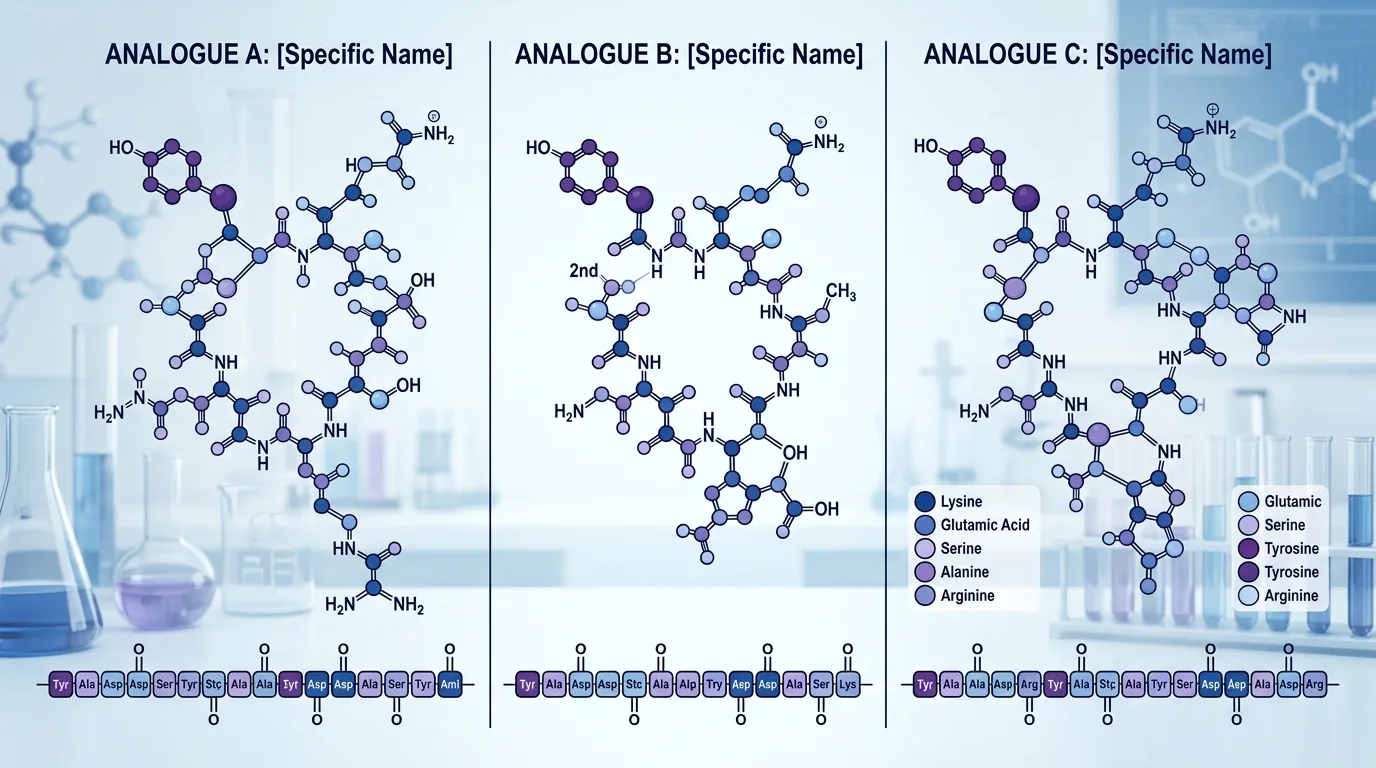
The structural relationship between GHRH and its receptor follows a two-region logic that has direct implications for analogue design. Residues 1 through 3 at the N-terminus are responsible for receptor activation, meaning they trigger the conformational change in GHRH-R that initiates G protein coupling and adenylate cyclase stimulation. The C-terminal region, spanning roughly residues 15 through 44, anchors the peptide to the receptor's extracellular domain with high affinity, functioning as a docking sequence that positions the active N-terminus correctly.
Tesamorelin retains both functional regions. The full 44-mer sequence provides complete C-terminal docking, ensuring that the N-terminal activation domain is optimally presented to the receptor's transmembrane core. The trans-3-hexenoic acid modification at His-1 alters the immediate N-terminal environment to block DPP-IV recognition while preserving sufficient binding geometry for full agonist activity. The result is a molecule that behaves as a high-affinity, full-efficacy GHRH-R agonist with extended plasma stability.
Sermorelin, as GHRH(1-29), retains the activation domain but lacks residues 30 through 44, which eliminates a substantial portion of the C-terminal docking surface. This reduces receptor binding affinity and shortens the duration of the GH secretory response per dose compared to the full 44-mer. Sermorelin remains a functional GHRH-R agonist, but the truncation translates into a weaker and briefer GH pulse amplitude at equivalent molar doses.
CJC-1295 shares sermorelin's truncated 29-mer backbone, meaning it carries the same C-terminal affinity limitation. The DAC modification addresses the half-life problem through albumin binding rather than receptor engagement, so the molecule's interaction with GHRH-R itself is not enhanced beyond what the 29-mer backbone provides. The extended circulation time compensates for reduced receptor affinity by increasing the duration of receptor exposure, but this comes at the cost of continuous, non-pulsatile GHRH-R stimulation.
| Analogue | Amino Acid Length | Receptor Binding Affinity | GH Pulse Characteristics | Approximate GH Peak Magnitude |
|---|---|---|---|---|
| Tesamorelin | 44 | High (full docking surface) | Preserved pulsatile architecture | High |
| Sermorelin | 29 | Moderate (truncated C-terminus) | Pulsatile, reduced amplitude | Moderate |
| CJC-1295 (DAC) | 29 + DAC | Moderate (truncated C-terminus) | Tonic, non-pulsatile | Sustained elevation |
The breakdown illustrates how the engineering approach determines not just how long the molecule stays in circulation, but how it interacts with the receptor at the molecular level. Sequence length and receptor binding affinity are upstream variables that shape everything downstream, including GH pulse dynamics and IGF-1 outcomes.
Pharmacokinetics: Half-Life Engineering and What It Costs
The mechanism by which tesamorelin achieves its extended half-life is chemically specific. The trans-3-hexenoic acid moiety conjugated to the alpha-amine of Tyr-1 sterically occludes the DPP-IV active site, preventing the enzyme from recognizing and cleaving the Tyr-Ala dipeptide. This steric protection extends plasma half-life from the native 6 to 7 minutes to approximately 26 to 38 minutes, sufficient to support once-daily subcutaneous dosing at 2 mg. Critically, the modification does not eliminate receptor binding because the trans-3-hexenoic acid group occupies a position that DPP-IV uses as a recognition handle but that GHRH-R tolerates with preserved agonist geometry.
Sermorelin's modest half-life extension to 10 to 20 minutes reflects the absence of any enzymatic protection at the N-terminus. The truncated sequence itself provides a marginal improvement over native GHRH, likely due to reduced tissue distribution volume for the smaller molecule, but DPP-IV remains capable of cleaving sermorelin at the same N-terminal site. This requires more frequent dosing to maintain meaningful GH axis stimulation.
CJC-1295 with DAC operates through an entirely different mechanism. The maleimido-propionic acid group on the DAC lysine residue forms a covalent bond with cysteine-34 on circulating albumin, effectively hitching the peptide to a large plasma protein with a half-life of approximately 19 days. The resulting complex circulates for 6 to 8 days, providing continuous low-level GHRH-R stimulation throughout the dosing interval. This produces sustained tonic GH elevation rather than discrete GH pulses, which raises the IGF-1 concentration progressively and substantially blunts the somatostatin counter-regulatory cycle that normally governs GH secretion.
The precise half-life values for comparison are as follows. Native GHRH: approximately 6.5 minutes. Sermorelin: approximately 15 minutes. Tesamorelin: approximately 32 minutes. CJC-1295 with DAC: approximately 168 hours (7 days). These numbers highlight the spectrum of pharmacokinetic profiles available within a single peptide class, and they frame the central pharmacological trade-off in this tesamorelin vs sermorelin vs CJC-1295 GHRH comparison.
Tesamorelin's intermediate half-life is arguably the most clinically useful position in this spectrum. It is long enough to support once-daily dosing but short enough that each dose produces a discrete GH secretory event rather than tonic GH elevation. Somatostatin feedback remains operative, meaning the body retains normal counter-regulatory control over GH output between doses.
GH Pulse Dynamics and the Pulsatility Advantage
Pulsatile GH secretion is not simply a physiological curiosity. It is a functionally important feature that maintains receptor sensitivity, enables somatostatin counter-regulation between pulses, and governs the differential effects of GH on metabolic targets including lipolysis, protein synthesis, and glucose homeostasis. When GH exposure transitions from pulsatile to tonic, several downstream consequences follow, including receptor downregulation, progressive somatostatin blunting, and disproportionate IGF-1 accumulation relative to the net GH signal.
Tesamorelin preserves pulsatile GH secretion because its 26 to 38 minute half-life allows the GH pulse triggered by each daily dose to resolve before the next dose is administered. Somatostatin counter-regulation occurs normally in the interpulse interval, maintaining receptor sensitivity and reducing the risk of tachyphylaxis. IGF-1 elevation is proportionate and predictable, consistent with the 61 to 91 µg/L increases from baseline observed in clinical trials.
CJC-1295 with DAC continuously occupies GHRH-R over the week-long dosing interval, producing a sustained GH elevation that progressively raises IGF-1. This tonic profile bypasses the somatostatin regulatory checkpoint and risks IGF-1 overshoot, particularly with repeated weekly dosing. For research applications requiring elevated GH axis activity without daily administration, this profile may be acceptable, but for clinical contexts where IGF-1 monitoring and physiological GH dynamics are priorities, the cost is significant.
Sermorelin preserves pulsatility but delivers lower GH pulse amplitude than tesamorelin at equivalent molar doses, a direct consequence of its reduced receptor binding affinity from the truncated C-terminal sequence. It represents a mild GH stimulant with a physiological secretion pattern, suitable for contexts where modest GH axis engagement is the therapeutic goal.
| Analogue | GH Secretion Pattern | Somatostatin Feedback Preserved | Tachyphylaxis Risk | IGF-1 Monitoring Requirement |
|---|---|---|---|---|
| Tesamorelin | Pulsatile | Yes | Low | Periodic (recommended) |
| Sermorelin | Pulsatile (reduced amplitude) | Yes | Low | Minimal |
| CJC-1295 (DAC) | Tonic (sustained elevation) | No | Moderate to High | Regular (essential) |
Clinical Evidence and Approved Indications
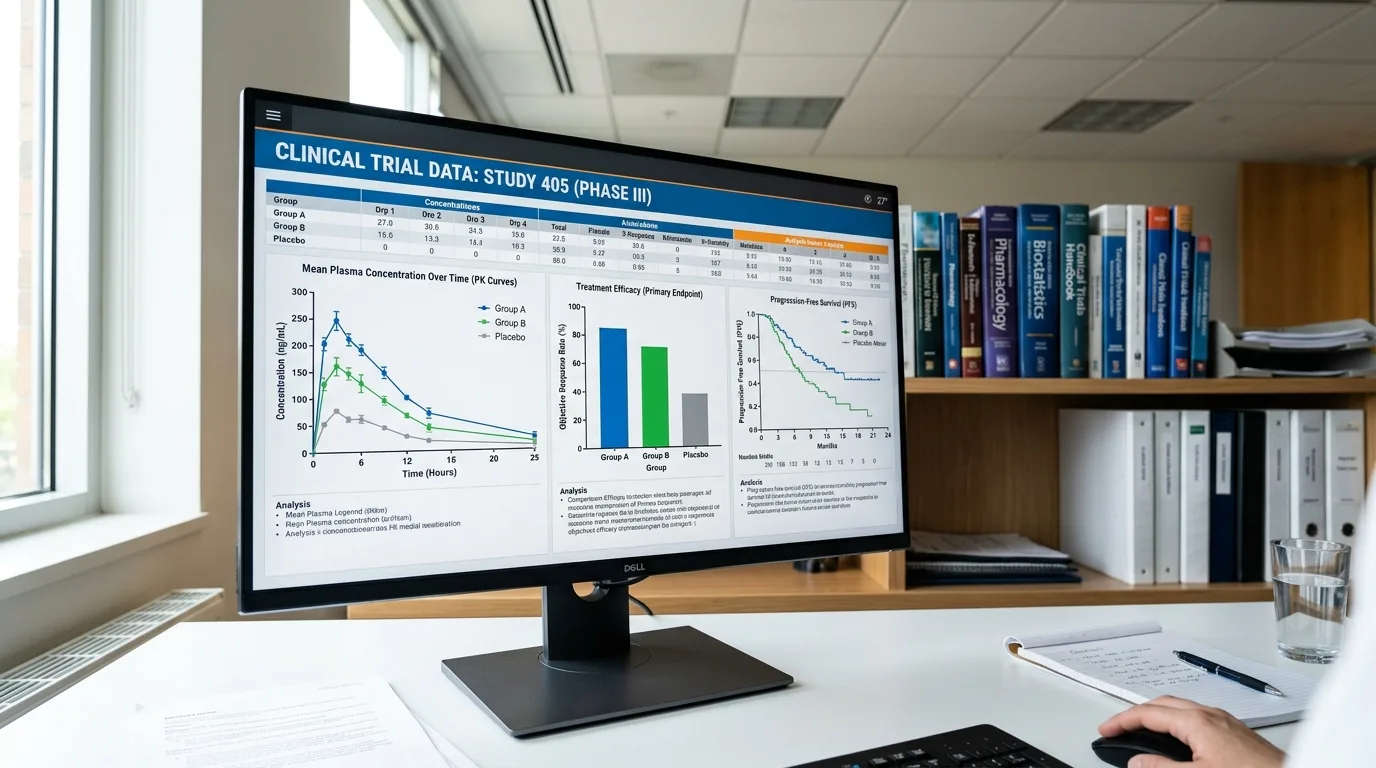
The clinical evidence base separates these three analogues more decisively than any structural parameter. Tesamorelin is the only GHRH analogue with FDA approval, granted on November 10, 2010, under the brand name Egrifta, for treatment of HIV-associated lipodystrophy characterized by excess visceral adipose tissue. This approval rests on two pivotal Phase III randomized controlled trials, LIPO-010 and LIPO-011, which enrolled HIV-infected adults with lipodystrophy and measured visceral adipose tissue by CT scan at 26 weeks.
The LIPO trials demonstrated mean VAT reductions of 15 to 18% from baseline in tesamorelin-treated participants versus placebo. A subsequent 2021 randomized controlled trial published in JAMA Network Open extended the follow-up to 52 weeks and confirmed sustained VAT reduction of approximately 18%, alongside maintained improvements in lipodystrophy-related quality of life metrics. Secondary endpoint data from the clinical trial program quantified several additional effects. IGF-1 increased by 61 to 91 µg/L from baseline, reflecting robust GH axis activation. Triglycerides decreased by 50 to 75 mg/dL, providing a measurable cardiovascular risk reduction benefit in a population already at elevated cardiometabolic risk. A separate 20-week trial in a non-HIV population with mild cognitive impairment reported significant improvements in executive function and verbal memory scores, alongside reduced amyloid-beta accumulation, suggesting potential translational relevance beyond HIV lipodystrophy.
These outcomes represent specific numerical benchmarks. VAT reduction at 26 weeks with tesamorelin: 15 to 18%. VAT reduction at 52 weeks: approximately 18%. IGF-1 change from baseline: 61 to 91 µg/L. Triglyceride reduction: 50 to 75 mg/dL. The breakdown illustrates the breadth of metabolic activity tesamorelin produces beyond its primary adipose-focused indication.
Sermorelin's regulatory history contrasts sharply. The FDA withdrew approval for sermorelin in 2008 following a voluntary manufacturer discontinuation, and it is now used exclusively off-label in the United States, primarily in adult growth hormone deficiency and anti-aging contexts. No Phase III randomized controlled trial evidence supports a metabolic indication comparable to tesamorelin's approved use. Its evidence base consists largely of smaller clinical studies and observational data.
CJC-1295 has no regulatory approval in any jurisdiction. Published human data are limited to Phase I and Phase II trials demonstrating dose-dependent GH and IGF-1 elevation, which established pharmacokinetic parameters and tolerability signals but did not advance to pivotal efficacy trials for any defined clinical indication. Its use remains confined to research contexts.
| Analogue | Regulatory Status | Approved Indication | Evidence Level | Primary Clinical Use |
|---|---|---|---|---|
| Tesamorelin | FDA-approved (2010) | HIV-associated lipodystrophy | Phase III RCT | VAT reduction, metabolic management |
| Sermorelin | Withdrawn (US, 2008) | None (off-label) | Phase I/II, observational | Adult GHD, anti-aging (off-label) |
| CJC-1295 (DAC) | Not approved (any jurisdiction) | None | Phase I/II only | Research use only |
Safety Profiles, Contraindications, and Monitoring Requirements
Tesamorelin's safety profile is the most thoroughly characterized of the three analogues, reflecting its Phase III clinical trial program and post-marketing surveillance dataset. Injection site reactions, including erythema, pruritus, and localized pain, occurred in up to 24% of clinical trial participants, making them the most common adverse event. Arthralgias were reported in approximately 13% of participants. Fluid retention and peripheral edema occurred in approximately 6%, consistent with GH-mediated sodium retention. Dose-dependent fasting glucose elevation was observed across the trial program, reflecting the GH-mediated reduction in peripheral insulin sensitivity that is an expected pharmacological consequence of GH axis activation.
Absolute contraindications for tesamorelin are well-defined. Active or suspected malignancy represents the primary contraindication given the mitogenic potential of elevated GH and IGF-1 signaling. Disruption of the hypothalamic-pituitary axis, including hypophysectomy, prior pituitary irradiation, or traumatic brain injury affecting pituitary function, removes the normal regulatory context in which tesamorelin acts. Pregnancy is classified Category X. Known hypersensitivity to GHRH or any formulation component contraindicates use. The FDA's Risk Evaluation and Mitigation Strategy program, initially required at approval, was discontinued in 2014 after post-marketing surveillance data confirmed that the risk-benefit profile did not require additional safety measures beyond standard prescribing information.
Sermorelin's shorter half-life is generally associated with a milder adverse effect profile, partly because peak GH concentrations are lower and the interpulse interval allows more complete normalization of GH-sensitive metabolic parameters. The absence of large Phase III trial data means that population-level adverse event frequencies are less precisely characterized than for tesamorelin.
CJC-1295 with DAC raises distinct safety concerns. Sustained tonic GH elevation over a week-long dosing interval creates conditions favorable for disproportionate IGF-1 accumulation, progressive glucose dysregulation, and potential receptor downregulation. No post-marketing safety dataset exists because the compound has never received regulatory approval. Drug interaction considerations relevant to all GHRH analogues include potential alteration of cytochrome P450 enzyme activity, particularly affecting drugs with narrow therapeutic indices that rely on CYP450 metabolism.
| Parameter | Tesamorelin | Sermorelin | CJC-1295 (DAC) |
|---|---|---|---|
| Injection site reactions | Up to 24% | Reported, frequency unclear | Reported, frequency unclear |
| Arthralgias | ~13% | Lower (shorter half-life) | Theoretical risk |
| Fluid retention | ~6% | Mild | Elevated risk (tonic GH) |
| Glucose dysregulation | Dose-dependent | Mild | Elevated (sustained GH) |
| IGF-1 monitoring | Recommended periodically | Minimal requirement | Essential (overshoot risk) |
| Post-market safety data | Available (2010–present) | Limited | None |
Analogue Selection Framework for Research and Clinical Contexts
Selecting the appropriate GHRH analogue requires matching the molecule's pharmacological profile to the specific requirements of the research question or clinical indication. A useful decision framework organizes the choice around three primary variables: the required GH secretion pattern, the acceptable dosing frequency, and the strength of evidence needed to support the application.
For clinical applications with regulatory and evidence requirements, tesamorelin is the unambiguous choice. It is the only analogue with FDA-validated Phase III trial data and an approved metabolic indication, and its full-sequence receptor engagement combined with pulsatility preservation makes it the most physiologically appropriate tool for long-term GH axis modulation. Its safety profile is the best characterized among the three. Clinicians working within approved indications or designing translational research around an evidence-supported molecule should default to tesamorelin as the reference standard in any tesamorelin vs sermorelin vs CJC-1295 GHRH comparison.
Sermorelin suits contexts requiring mild GH axis stimulation with a short activity window and minimal IGF-1 monitoring burden. Its truncated sequence and brief half-life make it a lower-intensity option appropriate for off-label applications where modest GH stimulation is the goal and the research or clinical question does not demand the full receptor engagement profile of the 44-mer.
CJC-1295 with DAC is best suited to pre-clinical research or exploratory studies where sustained GH axis elevation over days without daily administration is operationally required. Animal model studies examining chronic GH axis activation, or early-phase human pharmacology work characterizing tonic versus pulsatile GH signaling effects, represent appropriate use cases. Graduate students designing GH axis studies should note that the choice between pulsatile stimulation (tesamorelin or sermorelin) and tonic stimulation (CJC-1295 DAC) has direct implications for endpoint selection, particularly when IGF-1 is a primary readout, because tonic stimulation produces proportionally larger and less physiologically interpretable IGF-1 elevations.
The broader market context adds perspective. The global peptide therapeutics market was valued at approximately USD 40 billion in 2022 and is projected to grow at a compound annual growth rate of 7 to 9% through 2030. GHRH analogues represent a specialized but expanding segment within this market, driven by metabolic disease research, anti-aging clinical interest, and emerging cognitive applications. Projected market values by year illustrate this growth trajectory. 2022: approximately USD 40 billion. 2025: approximately USD 49 billion. 2030: approximately USD 70 billion. These numbers highlight the commercial and scientific momentum behind peptide-based GH axis modulators.
| Parameter | Tesamorelin | Sermorelin | CJC-1295 (DAC) |
|---|---|---|---|
| Sequence length | 44 amino acids | 29 amino acids | 29 amino acids + DAC |
| Modification type | N-terminal trans-3-hexenoic acid | Sequence truncation only | DAC albumin-binding moiety |
| Plasma half-life | 26–38 minutes | 10–20 minutes | 6–8 days |
| GH secretion pattern | Pulsatile | Pulsatile (reduced amplitude) | Tonic (sustained) |
| Regulatory status | FDA-approved (2010) | Off-label (US withdrawal 2008) | Research use only |
| Primary indication | HIV-associated lipodystrophy | Adult GHD (off-label) | None (research) |
| Evidence base | Phase III RCT | Phase I/II, observational | Phase I/II only |
| Key monitoring requirement | IGF-1, fasting glucose | Minimal | IGF-1, glucose (essential) |
The three GHRH analogues examined here represent a spectrum from truncated-sequence minimalism through full-sequence DPP-IV-resistant engineering to long-acting albumin-binding modification. Sermorelin's 29-mer truncation sacrifices receptor affinity for molecular simplicity. CJC-1295's DAC modification sacrifices physiological pulsatility for dosing convenience. Tesamorelin's approach, preserving the full 44-residue sequence while using a targeted N-terminal chemical modification to block enzymatic degradation, achieves the most balanced outcome across receptor fidelity, pharmacokinetic practicality, and GH pulse physiology.
The convergence of full-sequence receptor fidelity, preserved pulsatile GH secretion, and an FDA-validated clinical evidence base positions tesamorelin as the most thoroughly characterized analogue in this class for both therapeutic and translational research applications. That said, the correct selection in any specific context depends on matching the molecule's profile to the endpoint. Pulsatility preservation, dosing frequency constraints, and evidence-base requirements should each carry explicit weight in that decision rather than half-life alone serving as the determining variable.
For researchers and clinicians seeking to go deeper on the structural biology underpinning these differences, Molecule Notes provides dedicated resources on GHRH-R class B GPCR structural biology and Fmoc solid-phase peptide synthesis protocols for GHRH analogues, including synthesis challenges specific to the tesamorelin 44-mer such as His-1 racemization, Asp-3 aspartimide formation, and long-chain aggregation management strategies. Explore those resources to build the mechanistic foundation that makes analogue selection a scientifically rigorous decision rather than a pharmacokinetic preference.
Sources
- clinicalpeptide.org — clinicalpeptide.org
- peptidepedia.org — peptidepedia.org
- researchgate.net — researchgate.net
- nih.gov — pubmed.ncbi.nlm.nih.gov
- peptpedia.org — peptpedia.org
- mypeptidematch.com — mypeptidematch.com
- trimrx.com — trimrx.com
- superpower.com — superpower.com
- 503pharma.com — 503pharma.com
- newdrugloft.com — newdrugloft.com
- mypeptidematch.com — mypeptidematch.com
- patsnap.com — synapse.patsnap.com
- testing.com — testing.com
- reddit.com — reddit.com
- nih.gov — pmc.ncbi.nlm.nih.gov
- peptpedia.org — peptpedia.org
- riteaid.com — riteaid.com
- meto.co — meto.co
- wikipedia.org — en.wikipedia.org
- peptpedia.org — peptpedia.org
- nih.gov — ncbi.nlm.nih.gov
- researchgate.net — researchgate.net
- innerbody.com — innerbody.com
- trimrx.com — trimrx.com
- testing.com — testing.com
- empowersleep.com — empowersleep.com
- droracle.ai — droracle.ai
- youtube.com — youtube.com
- plos.org — journals.plos.org
- regulations.gov — downloads.regulations.gov