
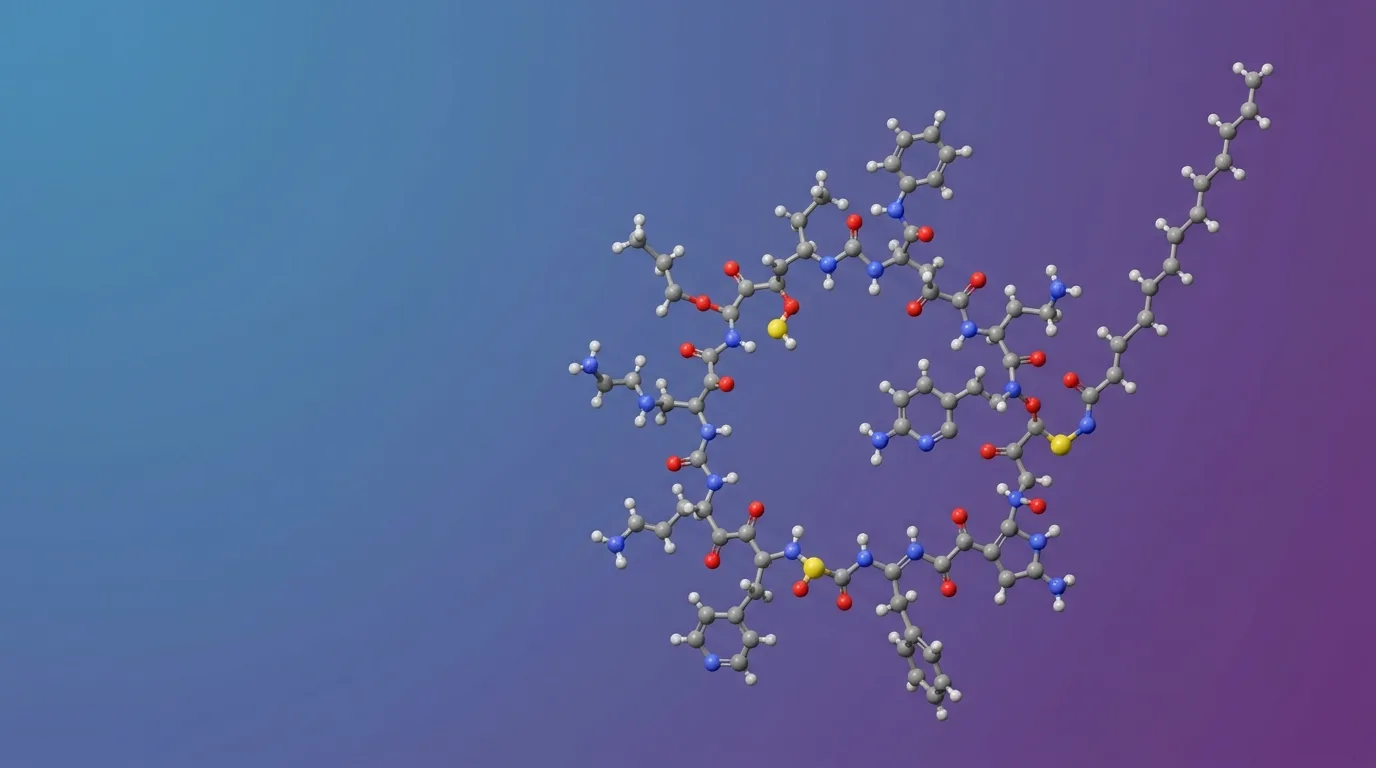
In the appendices of Eli Lilly's Phase 2 retatrutide trial data, submitted to regulators and published in the New England Journal of Medicine in 2023, sits a set of concentration-time curves that explain, more clearly than any marketing material, why a molecule targeting three separate hormone receptors can be injected just once a week. The trial, led by Jastreboff and colleagues, tracked plasma levels of a peptide chemists had modified with a 20-carbon fatty diacid, a change that turned a naturally short-lived hormone backbone into something that circulates for days rather than minutes. Retatrutide pharmacokinetics, absorption, half-life, and tissue distribution together tell a story that has little to do with convenience and everything to do with chemistry.
The central question is straightforward. How does a molecule survive long enough in the bloodstream to make weekly dosing pharmacologically feasible, and what happens to it between injection and clearance? The answer runs through absorption physiology, protein binding, and metabolic pathways that regulators scrutinized closely before allowing the compound to advance through clinical development.
What Retatrutide Is Built to Do
Retatrutide is a triple agonist engineered to bind the GLP-1, GIP, and glucagon receptors simultaneously, a design that distinguishes it from single-receptor peptides like earlier GLP-1 drugs or the dual GLP-1/GIP agonist tirzepatide. Each of the three hormones it mimics, glucagon-like peptide-1, glucose-dependent insulinotropic polypeptide, and glucagon itself, exists naturally in circulation for only minutes before enzymatic breakdown. That brevity is not incidental. Native incretin hormones are designed by evolution to signal transiently, in tight response to meals, not to sustain constant receptor engagement.
Engaging three receptor systems at once historically meant more frequent dosing was required, since each native hormone analog carried its own short clearance window. The engineering challenge for Lilly's chemists was not simply finding a molecule that could bind all three receptors. It was finding one that could do so while surviving long enough in plasma to make a weekly injection schedule plausible. The Jastreboff et al. 2023 NEJM publication [1] remains the primary public data source describing how that extension was achieved and measured in human participants.
Absorption, Half-Life, and Tissue Distribution in Retatrutide Pharmacokinetics
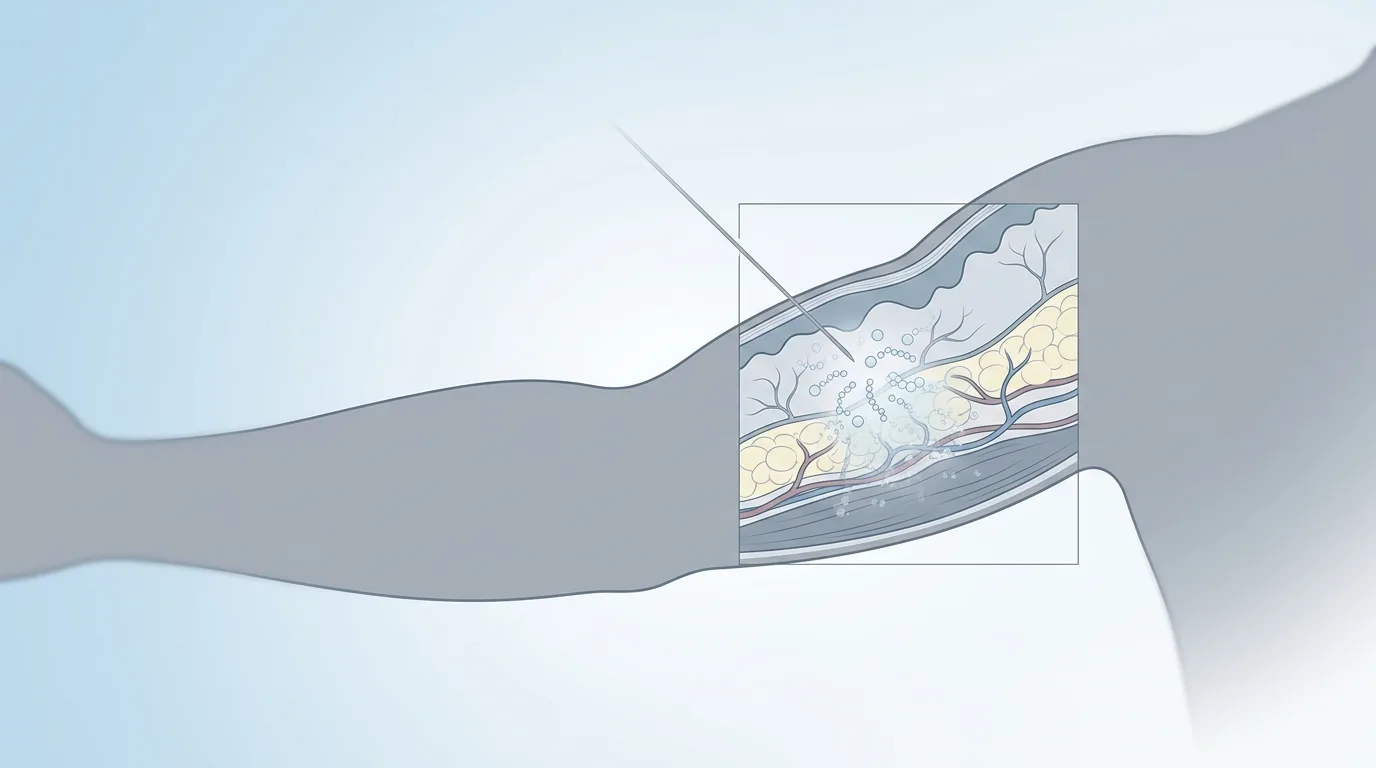
Retatrutide is not injected directly into the bloodstream. Like most therapeutic peptides delivered by injection, it is administered subcutaneously, meaning it must first move through the tissue beneath the skin before reaching systemic circulation. This absorption step shapes much of what happens pharmacokinetically in the first hours and days after a dose.
Published data indicate that peak blood concentrations, or Tmax, occur between 12 and 72 hours after injection [1][2]. That is a wide window compared to faster-absorbed compounds, some of which reach peak plasma levels within an hour. The breadth of that window reflects a depot-like release pattern: the subcutaneous tissue acts as a temporary reservoir, releasing the peptide gradually into circulation rather than producing a sharp, immediate spike.
Physiologically, this slow release matters. A rapid absorption profile tends to produce a pronounced peak followed by an equally pronounced decline, which can translate into more variable receptor engagement over time. A prolonged absorption phase, by contrast, smooths that curve, setting up conditions for more stable exposure across the dosing interval. A generalized concentration-time curve illustrating this 12-to-72-hour Tmax window, set against a hypothetical fast-absorption peptide peaking within an hour or two, makes the contrast visually clear.
Dose-Proportional Exposure and the Path to Steady State
Regulators evaluating a new compound look closely for dose-proportionality, meaning that increasing the administered dose produces a predictable, roughly linear increase in plasma concentration. Retatrutide's exposure has been characterized as dose-proportional across the doses tested in Phase 2 [1][3], a property that gives investigators confidence the drug behaves predictably rather than accumulating erratically at higher doses.
Steady state describes the point at which the amount of drug entering the body with each weekly injection equals the amount being cleared, so plasma concentrations plateau rather than continuing to climb. For retatrutide under weekly dosing, that equilibrium takes approximately four to five weeks to reach [4][1]. Until that point, concentrations rise incrementally with each successive dose.
This has a practical implication that is easy to overlook. In the early weeks of any weekly-dosed peptide regimen, circulating concentrations are still climbing, not yet stable. A bar or line chart showing a hypothetical accumulation curve across five weekly doses, gradually approaching a plateau, helps visualize why the first month of dosing looks pharmacokinetically different from the fifth or sixth.
The Fatty Acid Acylation Mechanism Behind the Half-Life
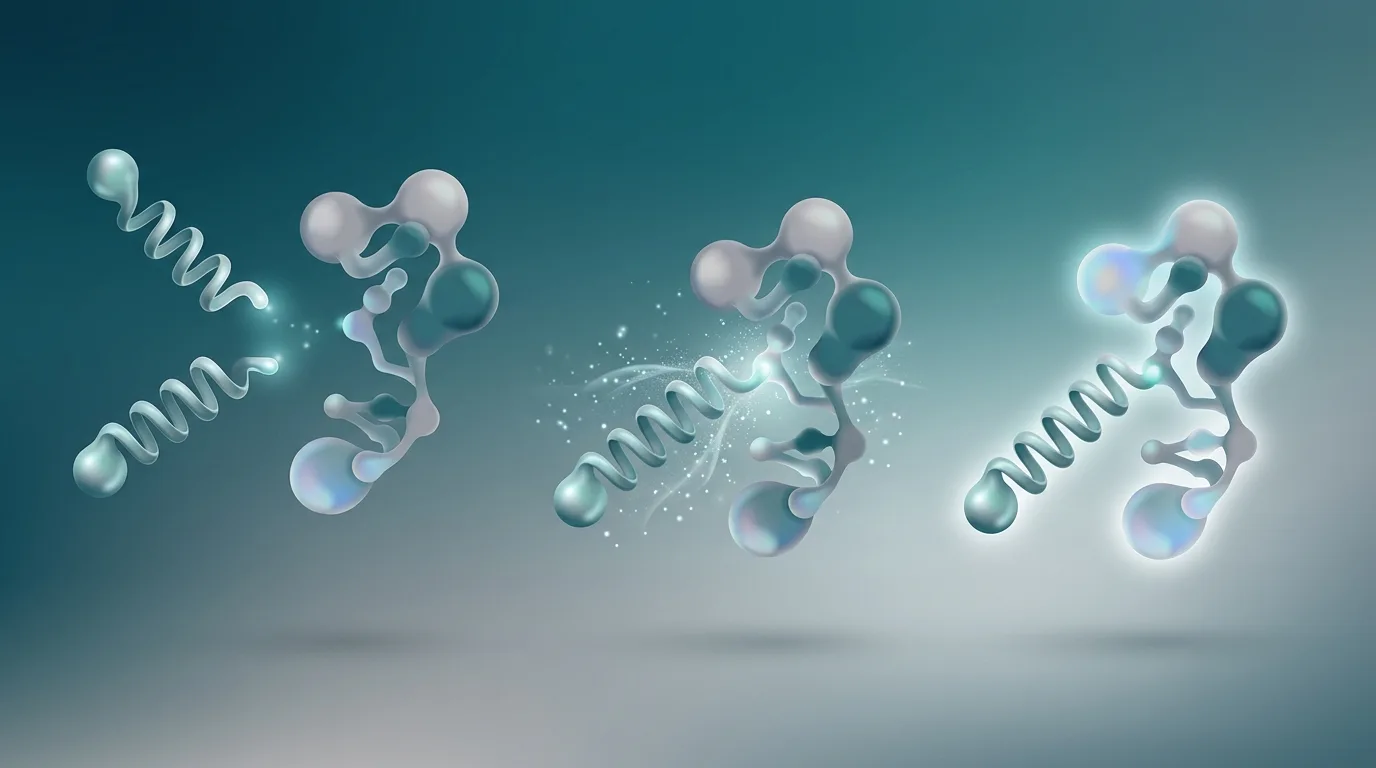
The chemical decision that makes all of this possible is fatty acid acylation, the attachment of a 20-carbon fatty diacid to the retatrutide peptide backbone [4][5]. This modification is the single engineering choice most responsible for the compound's extended presence in circulation.
The mechanism works something like hitching a ride. The fatty acid tail reversibly binds to albumin, the most abundant protein in blood plasma. Once bound, the retatrutide molecule effectively travels alongside albumin through the bloodstream rather than circulating freely on its own.
That binding confers two distinct protective effects. First, it shields the peptide from enzymatic degradation, since enzymes that would otherwise break down the molecule have more difficulty accessing it while it is complexed with albumin. Second, it prevents rapid renal filtration, since the kidneys filter free, unbound molecules far more efficiently than large albumin-bound complexes [4][5][6]. The combined effect is a half-life of approximately six days, the figure most directly responsible for making once-weekly dosing feasible for a molecule engaging three separate receptor systems.
This is not a novel trick unique to retatrutide. Fatty acid acylation as an albumin-binding strategy has precedent in other long-acting peptide therapeutics, including some GLP-1 receptor agonists that predate retatrutide by years. Retatrutide sits within that broader chemistry trend rather than representing an isolated innovation.
Where Retatrutide Goes: Tissue Distribution and Receptor Engagement
Here the public record grows notably thinner. Specific preclinical tissue distribution studies for retatrutide have not been made publicly available [4][7], and it is worth stating that plainly rather than filling the gap with inference dressed up as fact.
What is known is more general. Retatrutide's activity is directed toward tissues expressing GLP-1, GIP, and glucagon receptors, which include the pancreas, brain, gut, and liver [7][5]. These receptor types are not confined to a single organ system; they are expressed across multiple tissues, which is part of the reason a triple agonist has such broad physiological reach compared to a single-receptor peptide.
Beyond that general receptor mapping, though, the specifics of where retatrutide concentrates, in what tissue-to-plasma ratios, and over what time course, remain undocumented in the peer-reviewed literature currently available. This is a genuine gap. Detailed tissue distribution data, of the kind typically generated through radiolabeled tracer studies in animal models, would meaningfully advance understanding of how the drug's systemic effects map onto its receptor pharmacology. Until such data is published, the honest position is that this remains an open area of research rather than a settled question.
Metabolism and Clearance Pathways
Retatrutide's primary metabolic route is proteolytic degradation, meaning the peptide is broken down into smaller peptide fragments and, eventually, individual amino acids [4][6]. This differs fundamentally from the oxidative metabolism that governs how most small-molecule pharmaceuticals are processed.
The liver and kidneys are the organs primarily involved in this breakdown process [4][6]. Rather than being chemically transformed by a single enzymatic pathway, the peptide is essentially disassembled piece by piece, with its constituent amino acids returning to the body's general amino acid pool.
One finding of particular relevance to clinicians and researchers is that retatrutide does not interact with the cytochrome P450 enzyme system [4][5][6]. Cytochrome P450 enzymes are responsible for metabolizing a large share of conventional small-molecule drugs, and interactions with this enzyme family are a common source of drug-drug interaction risk, since two drugs competing for the same enzyme can alter each other's clearance unpredictably. Retatrutide's independence from this system reduces that particular category of interaction risk, a distinction that separates peptide metabolism generally from the metabolic pathways governing most tablet-and-capsule pharmaceuticals.
Inter-Individual Variability: An Open Question
No published data currently details the extent of inter-individual variability in retatrutide pharmacokinetics [4][1]. That absence deserves to be stated directly rather than glossed over, since variability between patients is often where clinical pharmacology gets complicated.
Factors known to affect the pharmacokinetics of other acylated, albumin-binding peptides include body weight, injection site, adiposity, and circulating albumin levels. Whether these same variables meaningfully shift retatrutide's absorption, half-life, or steady-state concentration in different individuals has not yet been reported in the public record.
This gap represents a genuine open question for future trials and regulatory submissions to address, not a detail to be speculated away. Given how central albumin binding is to the drug's extended half-life, it would be reasonable to expect some degree of variability tied to a patient's baseline albumin status or body composition, but reasonable expectation is not the same as documented evidence. The measured position, consistent with what has actually been published, is that this remains unresolved.
From Molecule to Schedule: Why Weekly Dosing Works
Taken together, the evidence traces a clear chain. Slow subcutaneous absorption, with Tmax spread across a 12-to-72-hour window, avoids a sharp early spike. A roughly six-day half-life, driven by reversible albumin binding through the 20-carbon fatty diacid tail, keeps the molecule in circulation well past the point where an unmodified incretin hormone would have been cleared. Together these properties produce comparatively stable concentrations across the full seven-day interval between injections.
That stability supports what researchers describe as continuous receptor engagement, meaning the drug remains available to interact with GLP-1, GIP, and glucagon receptors throughout the week rather than producing a brief pulse of activity followed by a long gap. This is the pharmacological reasoning regulators and researchers cite when accounting for the weekly interval. It is a consequence of measured plasma kinetics, not a scheduling choice made for patient convenience.
A summary table of key parameters, Tmax at 12 to 72 hours, half-life around six days, steady state reached at four to five weeks, and metabolism proceeding through proteolytic degradation rather than cytochrome P450 pathways, gives a compact reference point for how these pieces fit together.
Retatrutide's weekly schedule ultimately traces back to a single chemical decision: attaching a 20-carbon fatty diacid that allows the molecule to bind albumin and circulate for roughly six days. That decision, more than any
Sources
- nih.gov - pmc.ncbi.nlm.nih.gov
- nih.gov - pmc.ncbi.nlm.nih.gov
- nih.gov - pmc.ncbi.nlm.nih.gov
- glp3.wiki - glp3.wiki
- endoslimclinic.com - endoslimclinic.com
- evolabsresearch.co - evolabsresearch.co
- researchgate.net - researchgate.net