

Most people have at least heard of semaglutide, sold under the brand names Ozempic and Wegovy, and a growing number are familiar with tirzepatide, marketed as Mounjaro. These drugs have genuinely reshaped how medicine approaches obesity and metabolic disease. But a third molecule, retatrutide (LY3437943), is quietly producing clinical trial data that makes even tirzepatide look incremental by comparison. In a 2023 Phase 2 trial published in The New England Journal of Medicine, participants on the highest dose lost a mean of 24.2% of their body weight over 48 weeks, the highest figure ever recorded in a randomized controlled trial of a weight-loss drug.
Understanding why requires answering a question that sounds deceptively simple: what does it actually mean to activate three hormone receptors at once, and why does that matter? This article works through the retatrutide mechanism of action explained receptor by receptor, using plain analogies alongside precise pharmacology. Think of it this way. If semaglutide is a single-key ignition that starts one metabolic process, retatrutide is a three-switch control panel where each switch does something distinct, and throwing all three simultaneously produces an outcome no single switch can replicate on its own.
What Is Retatrutide (LY3437943) and Who Makes It?
Retatrutide is a synthetic acylated peptide developed by Eli Lilly and Company, currently advancing through Phase 2 and Phase 3 clinical development. It has not yet received regulatory approval from the FDA or any other agency for any indication. As a member of the incretin mimetic drug class, it is designed to mimic and amplify the actions of naturally occurring gut hormones that regulate blood sugar, appetite, and energy balance. For more on incretin-based therapies, see Understanding Incretin Hormones and Drugs.
To appreciate where retatrutide sits in the pharmacological landscape, it helps to trace a clear generational arc. First-generation agents like exenatide, liraglutide, and semaglutide are GLP-1 receptor monoagonists, targeting a single receptor. Tirzepatide, approved in 2022, added a second receptor, the GIP receptor, and became a dual agonist. Retatrutide adds a third receptor, the glucagon receptor, making it the first clinically advanced triple agonist. The weight loss outcomes across these generations tell a coherent story.
Semaglutide (2.4 mg weekly) produced approximately 15% mean body weight loss in the STEP 1 trial. Tirzepatide (15 mg weekly) reached approximately 22.5% in SURMOUNT-1. Retatrutide (12 mg weekly) reached 24.2% in its Phase 2 trial at 48 weeks. These numbers highlight a consistent pattern of escalating efficacy as receptor coverage expands across generations.
Retatrutide is administered as a once-weekly subcutaneous injection, the same format as semaglutide and tirzepatide. Eli Lilly has initiated Phase 3 trials under the TRIUMPH program, with results anticipated between 2025 and 2026. The commercial stakes are substantial. Goldman Sachs analysis projects the global obesity drug market will exceed $100 billion annually by 2030, positioning retatrutide as a potential blockbuster if Phase 3 data confirm Phase 2 signals. For further insights into the pharmaceutical market, see Goldman Sachs on the Future of Obesity Drugs.
The Three Receptors Retatrutide Targets: A Quick Orientation
Retatrutide simultaneously engages three distinct G protein-coupled receptors (GPCRs). These are the glucagon-like peptide-1 receptor (GLP-1R), the glucose-dependent insulinotropic polypeptide receptor (GIPR), and the glucagon receptor (GCGR). Each responds to a different naturally occurring hormone, and each governs a different dimension of metabolic physiology. A useful way to picture this is as three separate volume knobs on a metabolic mixing board.
GLP-1R is the appetite and insulin knob. Turning it up reduces hunger signaling in the brain and amplifies insulin release from the pancreas. GIPR is the fat-storage and tolerability knob. It fine-tunes how the body handles fat and, importantly, may soften some of the gastrointestinal side effects associated with aggressive GLP-1R stimulation. GCGR is the energy burn knob. Activating it tells the body to increase its resting metabolic rate and burn more fat, particularly in the liver.
Crucially, retatrutide does not simply blast all three receptors at maximum intensity. It is engineered with tuned, deliberate potency: high activity at GIPR and GCGR, and moderate but therapeutically meaningful activity at GLP-1R. This balance is achieved through precise amino acid sequence engineering built on a modified glucagon analog backbone. The goal is synergy, not brute force, extracting complementary benefits from each receptor while managing the side effects that come from over-stimulating any single pathway.
How the GLP-1 Receptor Component Works in Retatrutide Mechanism of Action Explained
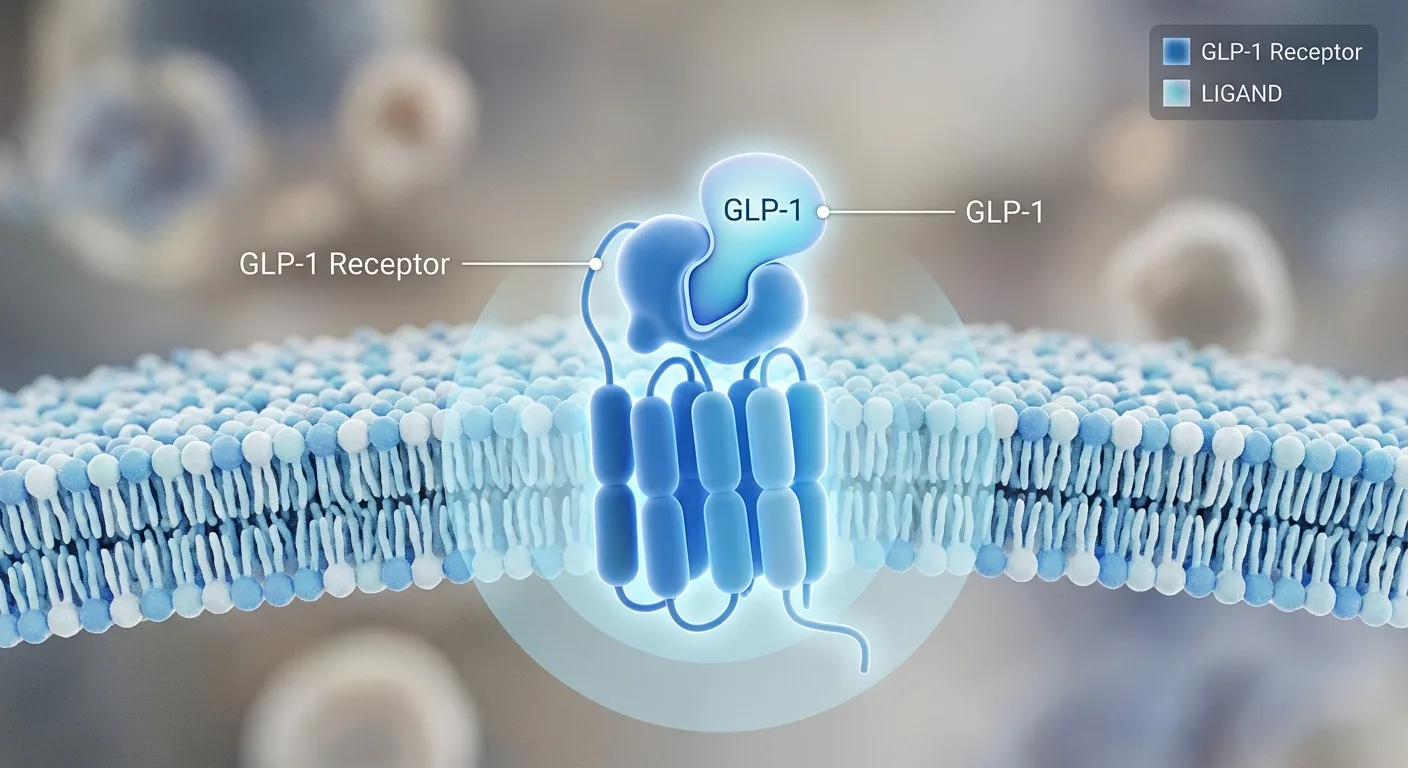
GLP-1R activation is the pharmacological cornerstone of this drug class, and retatrutide's engagement of it follows the same logic established by semaglutide. When GLP-1R is stimulated, pancreatic beta cells release insulin, but only when blood glucose is already elevated. This glucose-dependent mechanism is a critical safety feature. Unlike older insulin secretagogues that push insulin release regardless of glucose levels, GLP-1R agonism carries a low intrinsic risk of hypoglycemia.
Beyond the pancreas, GLP-1R activation suppresses glucagon release (which would otherwise raise blood sugar), slows gastric emptying to reduce the rate at which nutrients enter the bloodstream, and signals the hypothalamus to reduce appetite and overall caloric intake. This central nervous system effect on satiety is a major driver of the weight loss seen across this drug class.
The established clinical track record of semaglutide, a pure GLP-1R agonist achieving roughly 15% mean weight loss, demonstrates how much physiological work this single receptor can do. In retatrutide, the GLP-1R contribution also accounts for meaningful glycemic improvements. Phase 2 data showed HbA1c reductions of up to 2.02 percentage points in participants with elevated baseline glucose, consistent with the drug's ability to reduce both hepatic glucose output and postprandial glucose spikes through insulin amplification.
How the GIP Receptor Component Works
GIPR was once considered an unlikely target for obesity therapy. Early research suggested that GIP, the native hormone that activates this receptor, might actually promote fat storage, leading some researchers to propose that blocking GIPR rather than activating it would be the smarter strategy. Tirzepatide and retatrutide have fundamentally overturned that assumption. For a detailed review of GIP's biological roles, visit GIP and Its Role in Metabolism.
Current evidence indicates that GIPR agonism in both the central nervous system and adipose tissue works synergistically with GLP-1R activation to reduce food intake and modulate fat storage. Rather than making weight management harder, GIPR co-agonism appears to enhance the appetite-reducing signals already generated by GLP-1R stimulation. This is one reason tirzepatide outperformed earlier GLP-1 monoagonists, and it remains a meaningful contributor to retatrutide's efficacy.
Equally important is GIPR's role in tolerability. Strong GLP-1R agonism frequently causes nausea, vomiting, and other gastrointestinal discomfort, the most common reasons patients discontinue these medications. Evidence suggests that GIPR co-agonism can attenuate this nausea, potentially because GIP receptor signaling modulates emetic pathways in the gut and brain. This may partly explain why dual and triple agonists in clinical trials tend to show gastrointestinal adverse event profiles that are manageable relative to their potency. An emerging area of interest is GIPR's anabolic effect on bone tissue, which could give retatrutide a musculoskeletal safety advantage over pure GLP-1R agents, though this requires further clinical investigation.
How the Glucagon Receptor Component Works — The Key Differentiator
Glucagon receptor activation is what separates retatrutide from everything that came before it, including tirzepatide. Tirzepatide engages GLP-1R and GIPR, producing substantial weight loss through appetite suppression and metabolic modulation. What it cannot do is drive the thermogenic and hepatic fat-burning effects that GCGR activation unlocks. This is the pharmacological leap that retatrutide represents. For more on glucagon’s role in metabolism, see Glucagon and Energy Homeostasis.
When GCGR is activated, several things happen simultaneously. The liver increases fatty acid oxidation, meaning it burns more fat rather than storing it as triglycerides. Adipose tissue undergoes greater lipolysis, releasing stored fat into circulation for use as fuel. And resting energy expenditure increases, meaning the body burns more calories even without any change in physical activity. To put it in plain terms: if GLP-1R turns down the appetite dial and GIPR fine-tunes the fat-storage setting, glucagon receptor activation turns up the metabolic furnace.
This distinction has particular relevance for liver health. Retatrutide is being investigated as a potential treatment for metabolic dysfunction-associated steatohepatitis (MASH, formerly called NASH), a condition characterized by fat accumulation and inflammation in the liver. The combination of reduced hepatic lipogenesis through GLP-1R and increased hepatic fatty acid oxidation through GCGR creates a two-sided attack on liver fat that neither receptor achieves alone. Preclinical animal model data showed that triple GLP-1R/GIPR/GCGR agonism produced significantly greater reductions in hepatic steatosis than dual agonism, providing biological rationale for the human trial results.
The concern historically associated with GCGR agonism is that glucagon raises blood sugar, which seems counterproductive in a metabolic drug. Retatrutide manages this tension through its tuned potency design. By pairing moderate GCGR activity with robust GLP-1R and GIPR stimulation, the insulin-releasing and glucose-lowering effects of the incretin receptors offset the hyperglycemic potential of glucagon receptor activation, leaving the thermogenic and fat-oxidation benefits intact while maintaining glycemic safety.
Phase 2 Trial Results: What the Data Actually Shows

The Phase 2 trial of retatrutide (NCT04881760) enrolled 338 adults with obesity, or overweight with at least one weight-related comorbidity. Participants were randomized across multiple dose arms receiving 1 mg, 4 mg, 8 mg, or 12 mg weekly, or placebo, over 48 weeks. The study was designed to establish dose-response relationships and safety signals ahead of the larger Phase 3 program.
The dose-response pattern was clear and consistent. The 1 mg dose produced modest weight reduction compared to placebo. The 4 mg arm showed meaningful separation. The 8 mg arm delivered substantial efficacy. And the 12 mg arm achieved the headline result of 24.2% mean body weight loss at 48 weeks. The breakdown across arms illustrates a strong linear dose-response relationship that supports further development at the higher end of the dose range.
Beyond weight, the metabolic co-benefits were comprehensive. Compared to placebo, retatrutide produced statistically significant improvements in fasting glucose, HOMA-IR (a standard measure of insulin resistance), systolic blood pressure, serum triglycerides, and waist circumference. HbA1c fell by up to 2.02 percentage points in participants with elevated baseline values. These figures reflect the broad metabolic reach of a molecule engaging three complementary receptor pathways rather than one. For a deeper understanding of insulin resistance and related metabolic markers, see Insulin Resistance and Cardiometabolic Disease.
The safety profile aligned with the established GLP-1R agonist class. Gastrointestinal adverse events, primarily nausea, vomiting, diarrhea, and constipation, were the most frequently reported. These were predominantly mild to moderate in severity and followed a dose-dependent pattern consistent with what has been observed with semaglutide and tirzepatide. There were no unexpected safety signals that would suggest the added GCGR agonism introduces new or unpredictable toxicities.
The Peptide Engineering Behind Once-Weekly Dosing
Peptides are naturally short-lived in the body. Enzymes degrade them rapidly, and small molecules clear quickly through the kidneys. Left unmodified, a peptide drug like retatrutide would require multiple daily injections to maintain therapeutic plasma concentrations, a practical barrier to patient use. The solution is fatty acid acylation, the same chemical strategy that gives semaglutide its once-weekly profile. For an overview of peptide modifications, see Peptide Modification Strategies.
In retatrutide, a C18 fatty diacid chain is attached via a chemical linker to a lysine residue within the peptide backbone. This fatty acid tail allows the drug to bind reversibly to serum albumin, a large and abundant plasma protein weighing approximately 66 kDa. Albumin circulates continuously in the bloodstream, and when retatrutide binds to it, the drug essentially hitches a ride on a protein too large to be filtered by the kidneys or easily degraded by circulating proteases. This extends the plasma half-life to approximately one week, making once-weekly dosing pharmacokinetically viable.
The engineering precision required here is substantial. The specific length of the fatty acid chain, the chemical nature of the linker, and the position of the lysine attachment point all influence how tightly retatrutide binds to albumin and therefore how long it persists in circulation. Too loose a binding affinity and the drug clears too quickly. Too tight and it may not release efficiently to reach target tissues. This kind of molecular fine-tuning, adjusting amino acid sequence and chemical modifications to control pharmacokinetics with precision, is a hallmark of modern pharmaceutical peptide engineering and distinguishes these agents from simpler synthetic peptides.
Retatrutide vs. Semaglutide vs. Tirzepatide: How Do They Compare?
Placing retatrutide in context requires an honest look at how it compares to the two drugs that currently define the standard of care in pharmacological obesity treatment. Semaglutide targets one receptor (GLP-1R), is approved for obesity under the Wegovy brand, and achieved approximately 15% mean body weight loss in the 68-week STEP 1 trial. Tirzepatide targets two receptors (GLP-1R and GIPR), is approved as Mounjaro for type 2 diabetes and as Zepbound for obesity, and achieved approximately 22.5% mean weight loss in the 72-week SURMOUNT-1 trial. Retatrutide targets three receptors (GLP-1R, GIPR, and GCGR), is not yet approved, and achieved 24.2% mean weight loss in its 48-week Phase 2 trial.
To make these percentages concrete: for someone weighing 250 pounds, a 15% reduction means losing approximately 37 pounds on semaglutide. Tirzepatide's 22.5% translates to roughly 56 pounds. Retatrutide's 24.2% would represent approximately 60 pounds. These numbers highlight how even a few percentage points of additional efficacy translate into meaningful real-world differences in body weight and associated cardiometabolic risk.
An important caveat applies here. These three figures come from separate trials with different patient populations, different durations, and different trial designs. They are not head-to-head comparisons, and drawing firm conclusions from cross-trial comparisons requires caution. The appropriate scientific standard will be set by the Phase 3 TRIUMPH program and the diabetes-focused NCT05019755 trial, which together represent the pivotal data Eli Lilly will need for regulatory submission. Those results, expected in 2025 and 2026, will determine whether retatrutide's Phase 2 promise translates into the validated, approvable efficacy profile that the field is watching for.
What This All Means: The Bigger Picture
The retatrutide mechanism of action explained in full reveals something worth sitting with. This is not simply a more potent version of existing drugs. It is a mechanistically distinct pharmacological strategy where each receptor contributes a different physiological lever, and their simultaneous activation produces effects that neither single nor dual agonists fully replicate.
GLP-1R reduces appetite and supports insulin function. GIPR amplifies that effect while improving tolerability and potentially protecting bone health. GCGR turns up the body's energy expenditure and fat-burning machinery at the cellular level, particularly in the liver. Together, these three pathways create a metabolic intervention that addresses obesity from multiple directions at once, which is likely why the weight loss outcomes are as striking as they are.
Retatrutide remains investigational. Phase 3 data and regulatory review lie ahead, and the drug is not approved for clinical use in any market. What is already clear, even from Phase 2 alone, is that this molecule represents a landmark in applied peptide chemistry. Its development demonstrates how precise molecular engineering at the amino acid level, tuning receptor selectivity, optimizing acylation chemistry, balancing agonist potency across three distinct targets, can translate into profoundly different real-world outcomes for patients with metabolic disease.
For readers who want to go deeper, Molecule Notes covers related topics including incretin pharmacology, peptide acylation strategies, the structural biology of GPCRs, and the broader GLP-1 drug development landscape. Understanding how molecules like retatrutide are built from the amino acid up is where chemistry and medicine converge most productively.
Sources
- prnewswire.com — prnewswire.com
- drugs.com — drugs.com
- drugs.com — drugs.com
- nih.gov — pmc.ncbi.nlm.nih.gov
- nih.gov — pmc.ncbi.nlm.nih.gov
- nih.gov — pmc.ncbi.nlm.nih.gov
- uchealth.org — uchealth.org
- superpower.com — superpower.com
- patsnap.com — synapse.patsnap.com
- nih.gov — pmc.ncbi.nlm.nih.gov
- infiniskin.com — infiniskin.com
- adameetingnews.org — adameetingnews.org